Sales engagement
The 7 most important steps in a sales call

Suchibaksmita Sahoo
Sr. Manager, Web Marketing
Published on: April 27, 2018
Last modified on: March 4, 2026

More often than not, sales call steps are thought about in the wrong way.But compare them to a map that you would use while driving.When you’re going somewhere new, you almost always use maps to give you a plan and direction.Then, each proceeding time, you might use your directions a little less.Same thing here.Many sales reps even go into calls blind, not even know how to structure the conversation. If you don’t have the right plan going into a sales call, it’s going to be much harder to get to the next stage in a sales cycle.So what sales call steps should you follow?Our data team has analyzed nearly 2 million sales calls with AI and machine learning to find out exactly what works on sales calls.We’ve formatted everything into 7 concise steps for you to follow.Let’s get started. [newsletter]
Sales Call Step 1: Prepare like aStrategist
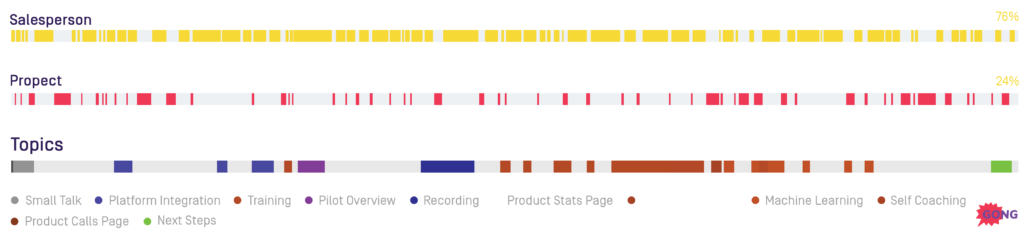
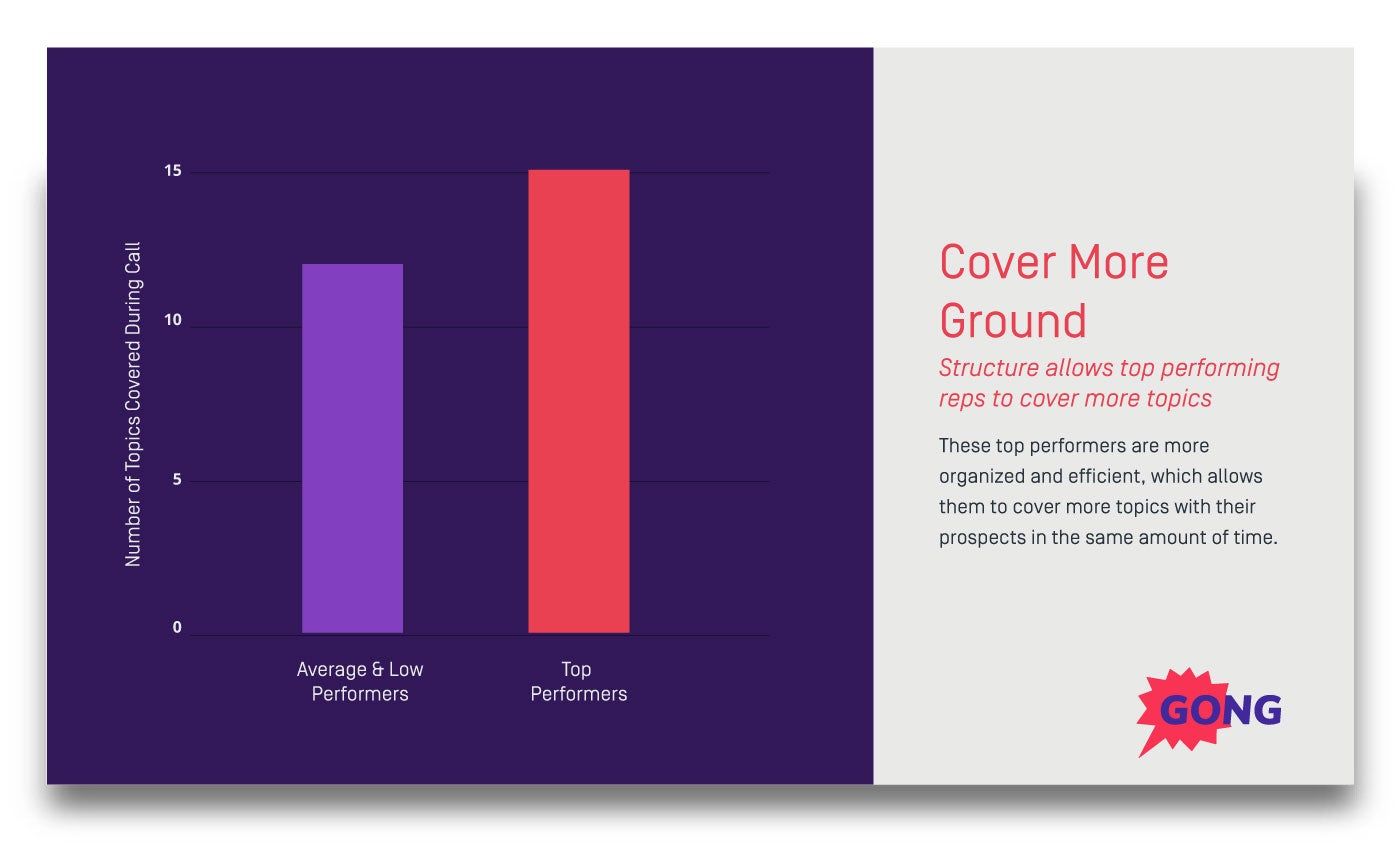
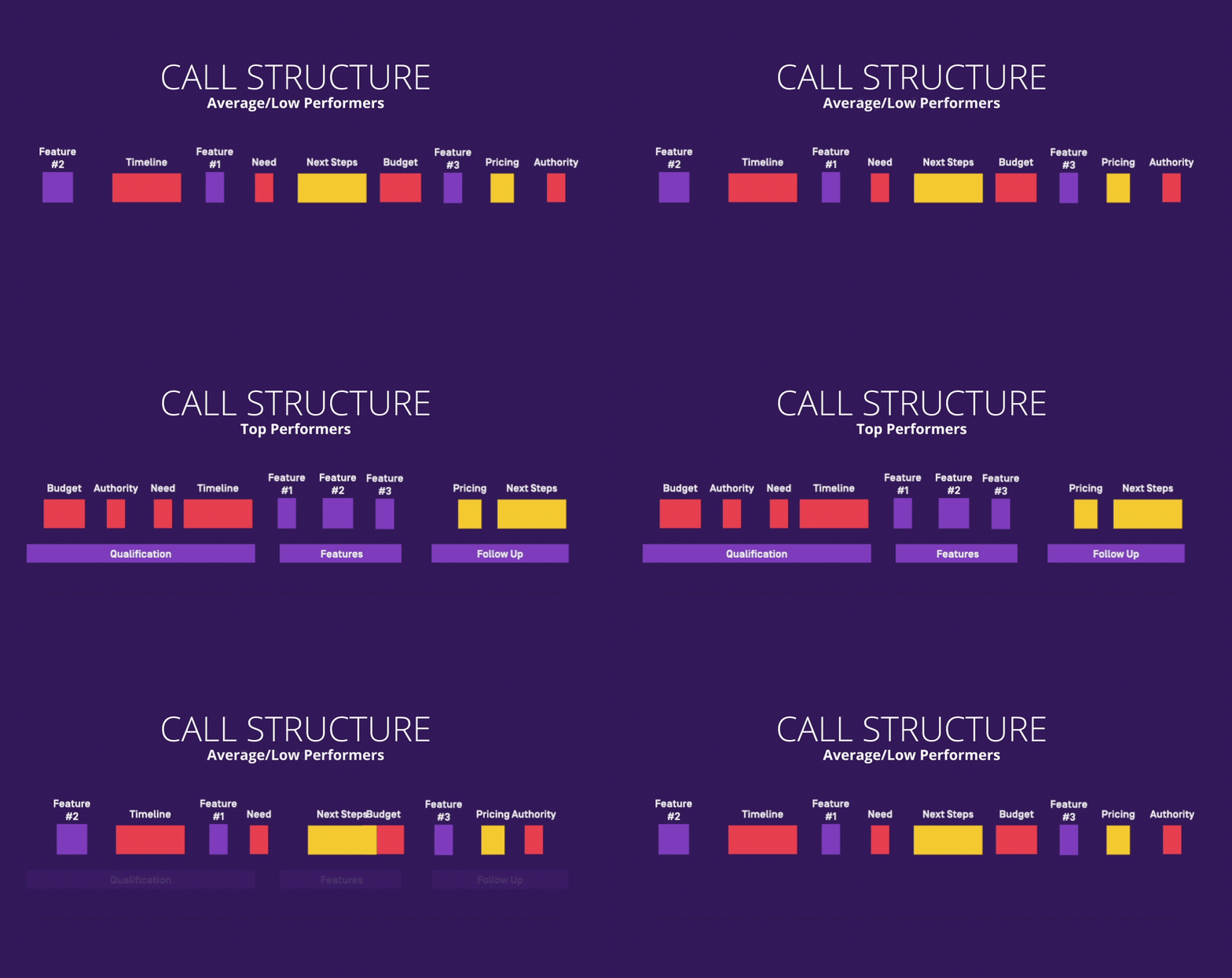
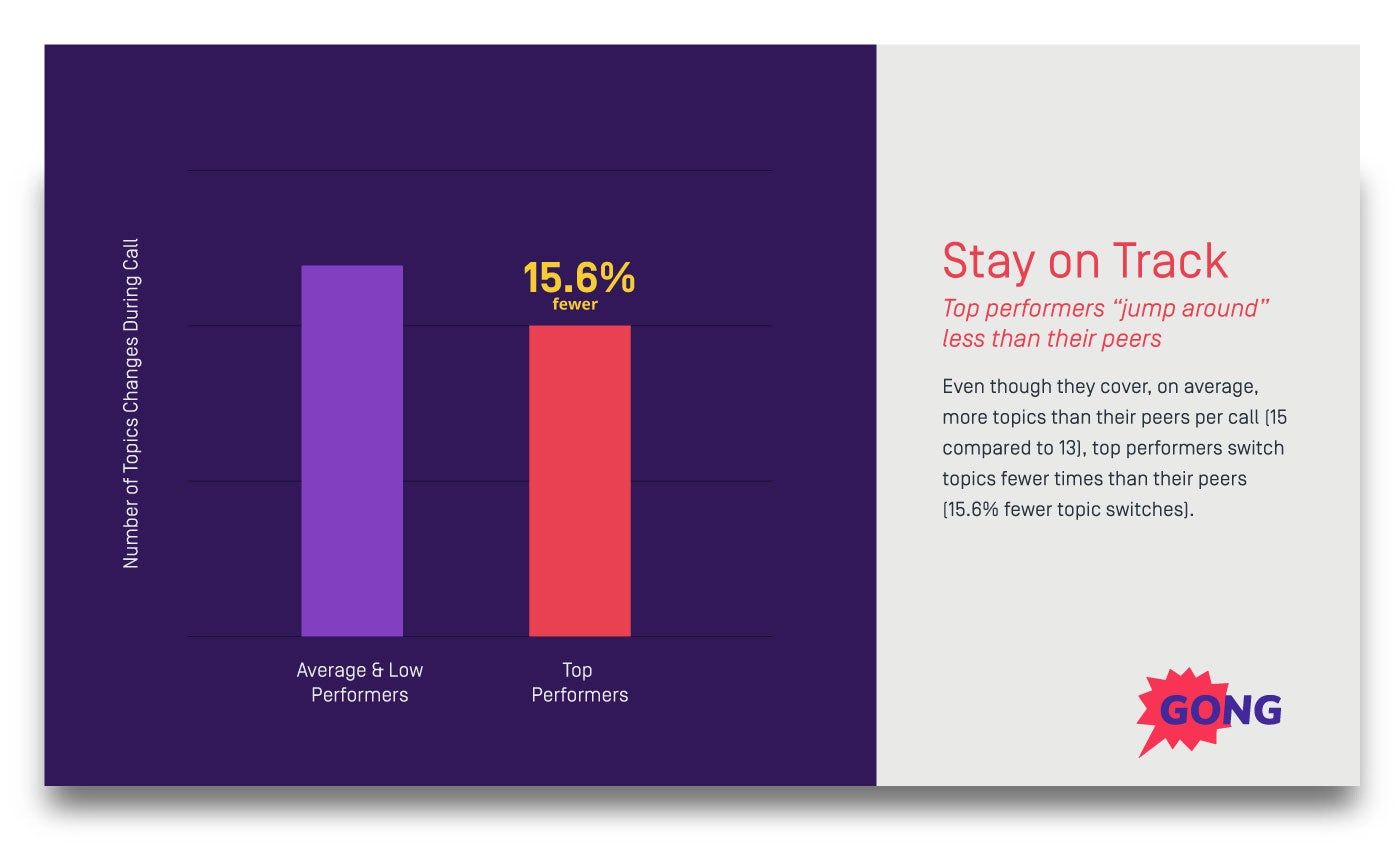
When you think of a rep that’s hungry to close deals, you probably picture the stereotypical seat-of-their-pants, adrenaline-pumped sales junkies.This assumption is wrong.The top sellers succeed because they stay calm, cool, collected.And more importantly,they always come prepared.Mega-successful reps are some of the most methodical and strategically minded people in business.They’ve rehearsed their sales call process , and never show up just to “wing it.”Again, we know this from studying roughly 2 million B2B sales calls recorded on web conferencing platforms and call software solutions like Zoom and GoToMeeting.We mapped out conversations to see which topics were discussed, for how long, and when.The top 5-10% of performers use a more organized, repeatable sales process than their peers.Here are three data points to prove it:Top reps cover more topics than their peers: 15 compared to 12 topics on a 43-minute call:You might think that with so many topics, their calls would be all over the map.No, no, my friend.Their conversations are sequential. When they switch topics, they stick with somethingrelated.It’s as if they use larger themes in their conversations so that every topic switch falls under a theme and is a natural progression, not a leap.Not surprisingly, average and low-performing reps change topics haphazardly:Finally, clustering topics into themes means that top performers switch between topics less frequently their less successful peers.In fact, their linear approach means they have 15.6% fewer topics switches on average, even though they talk about more topics.They jump around a lot less than their low-performing peers who are all over the place:The key takeaway for reps?Prepare in advance and know how to move your conversations smoothly from start to finish.
Sales Call Step 2: Open Your Call Like a Pro
A great sales call structure starts with a great “opening” to the meeting. Here’s how we’ve seen the best salespeople start their sales meetings:
- Start with small talk:A common error for newer reps is divingstraightinto business as soon as the prospect hops on the conference call. Unfortunately, this comes across as robotic. Instead, spend a few minutes warming up the tone of the call by sounding like a real person on the other line.
- Propose an agenda:Kick things off by saying,“I’like to set an agenda for this meeting so we can cover as much ground as possible. Is that alright with you?”Then, propose your agenda, and ask the prospect if they’like to add or remove anything from it. If they do, it means they’ll feel more of a sense ofownershipof the meeting.
- Set an upfront contract:By doing this, you’re getting the prospect to agree to schedule a next step (or ending the meeting without one clearly) at thebeginningof the meeting. It helps you avoid “maybe” land where your prospect goes dark, and you don’t know if she’s interested. Try saying something like this:“The sole objective of this meeting is simply to determine if we should schedule a second meeting. So by the end of this meeting, I’like you to be in a position where either 1) You see value in this, want to explore further, and we schedule the next logical step, or 2) You don’t see value in this, at least for now, and we cleanly go our separate ways. Is that fair?”
Sales Call Step 3: Identify Problems or Opportunities
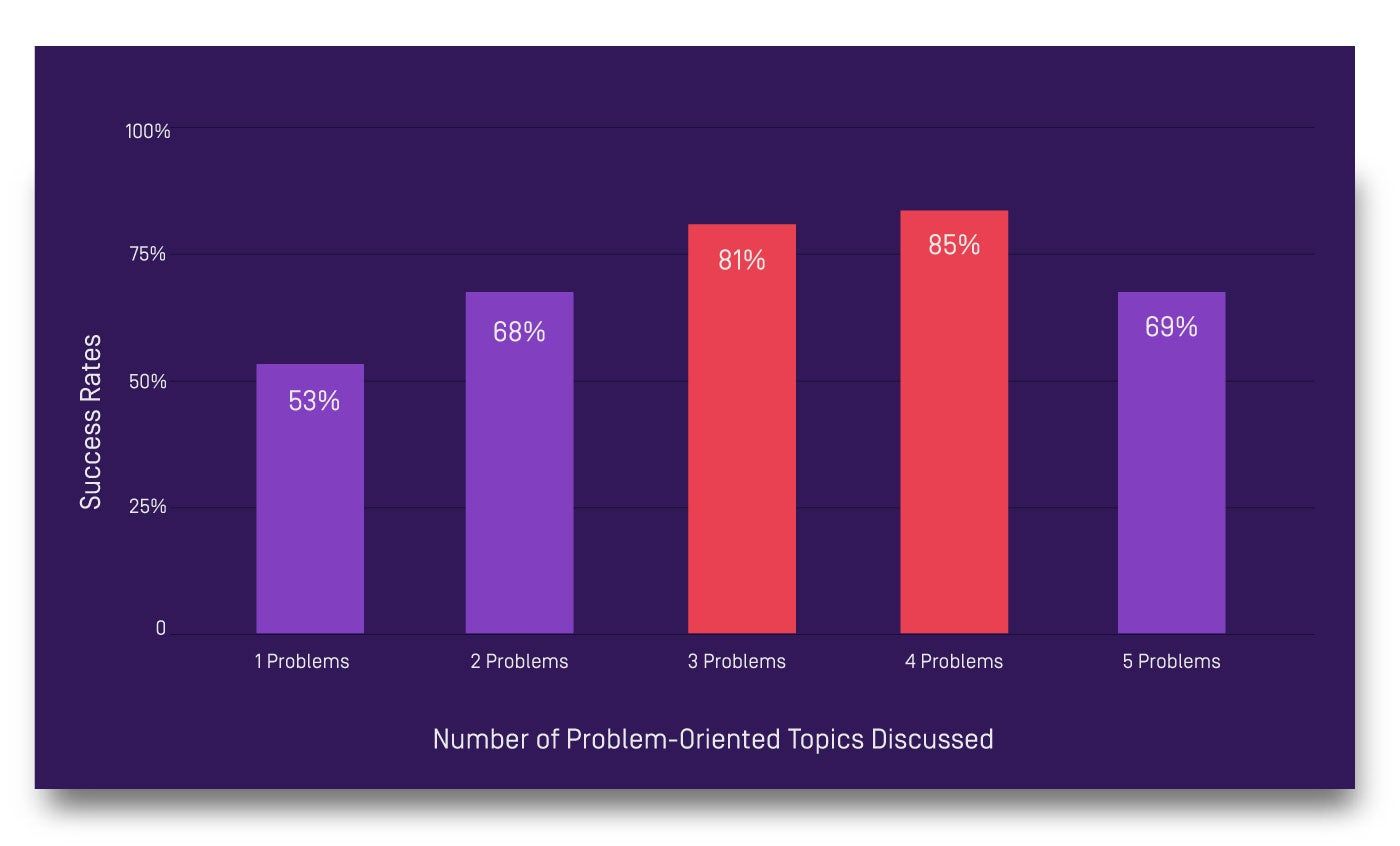
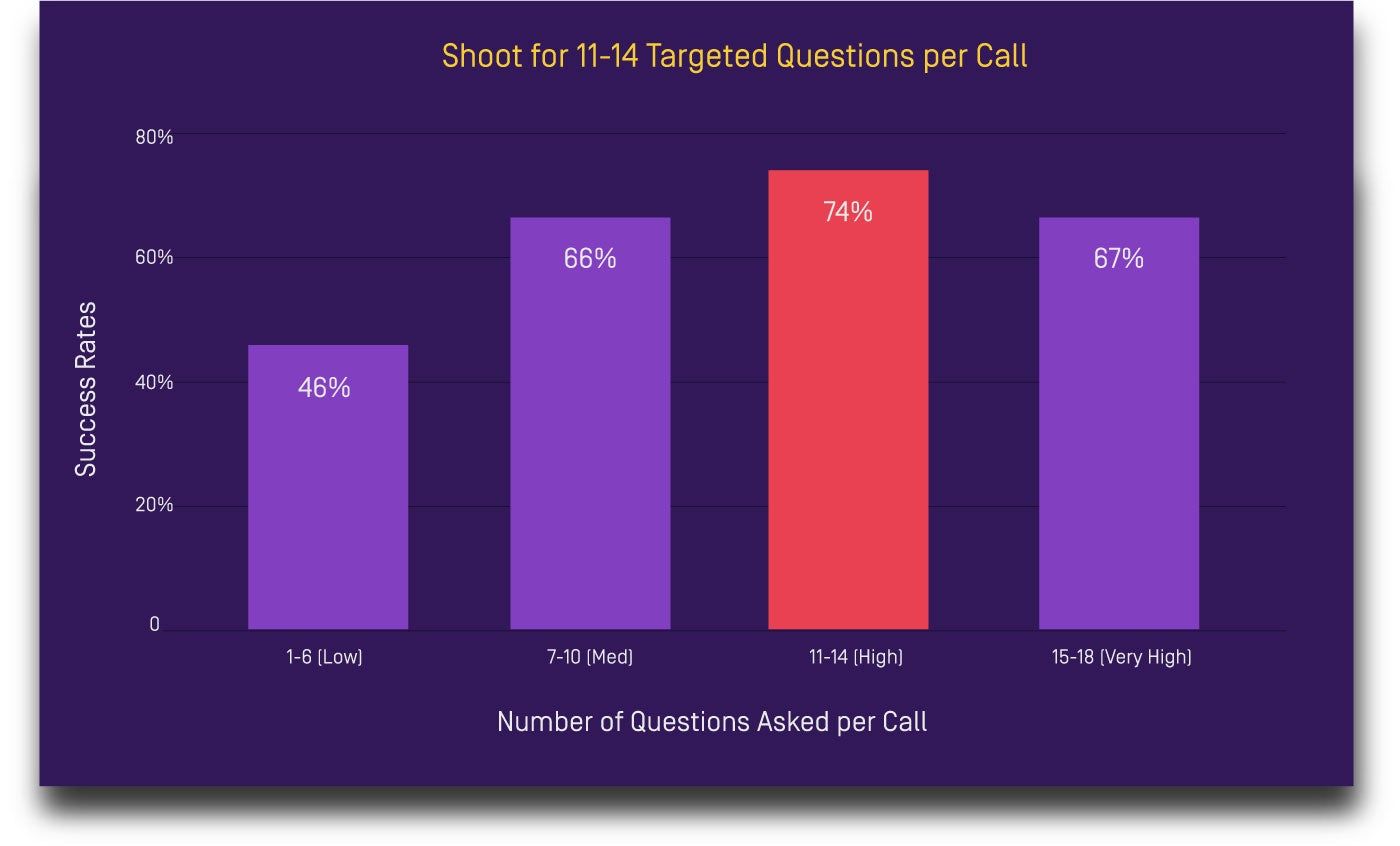
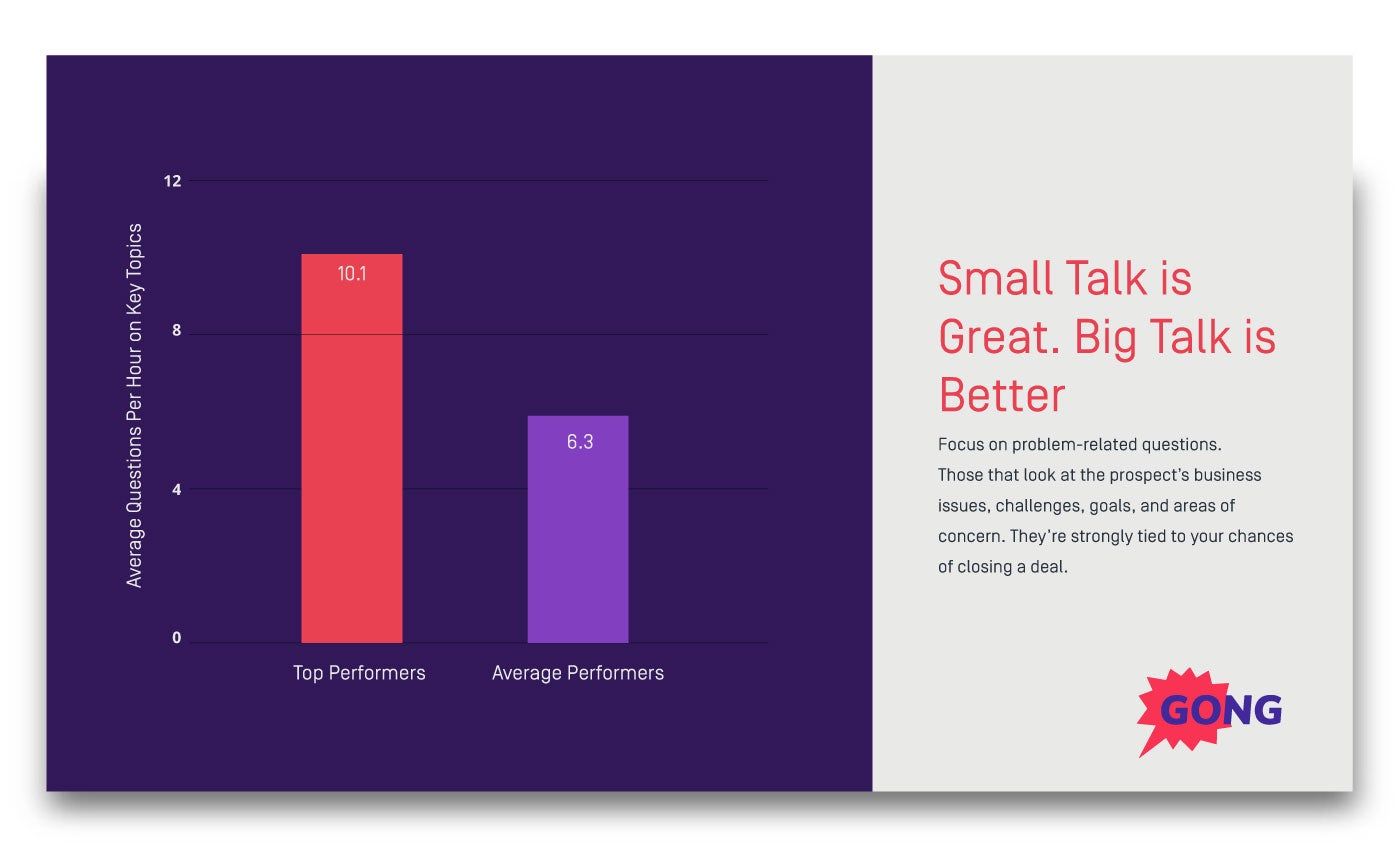
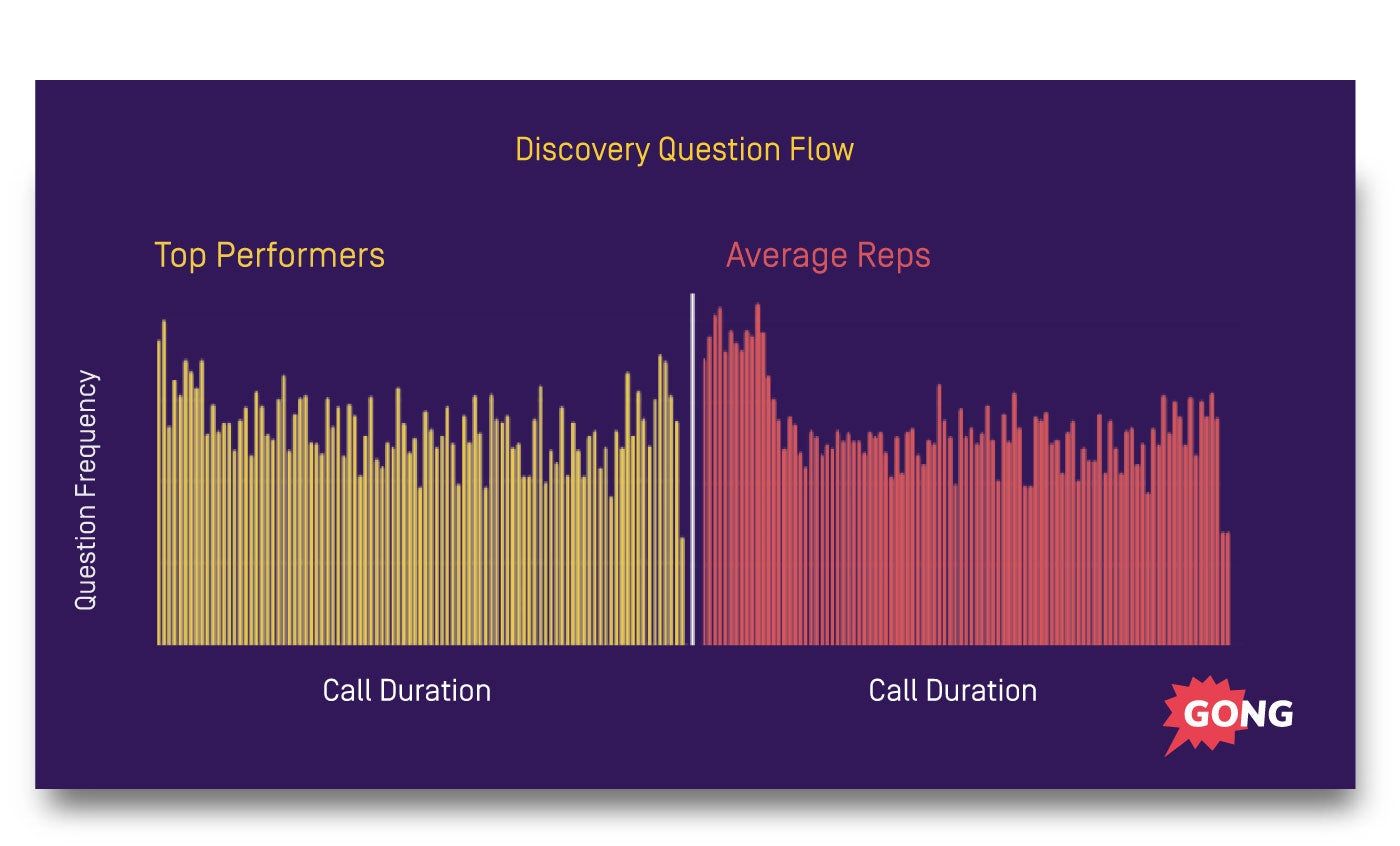
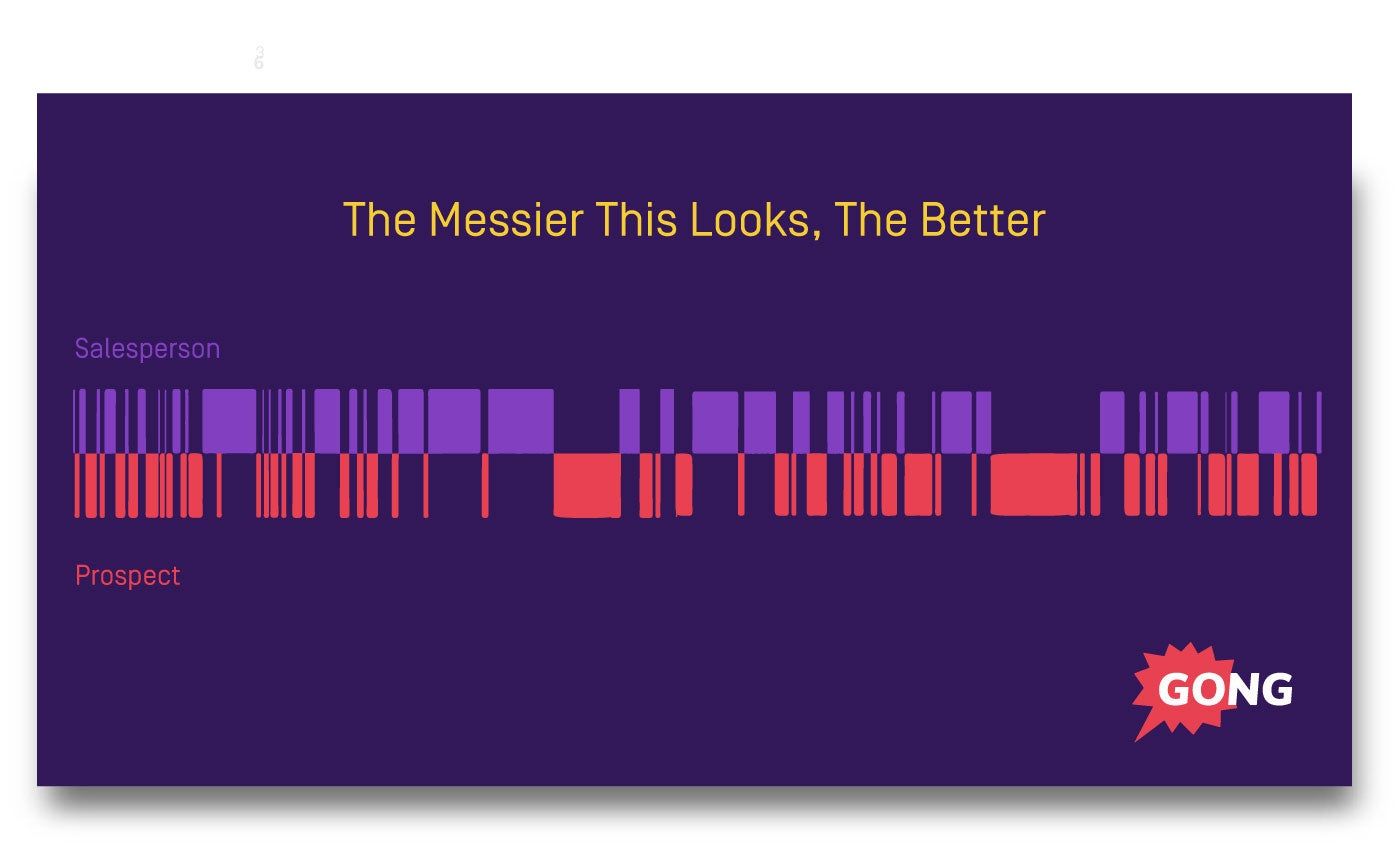
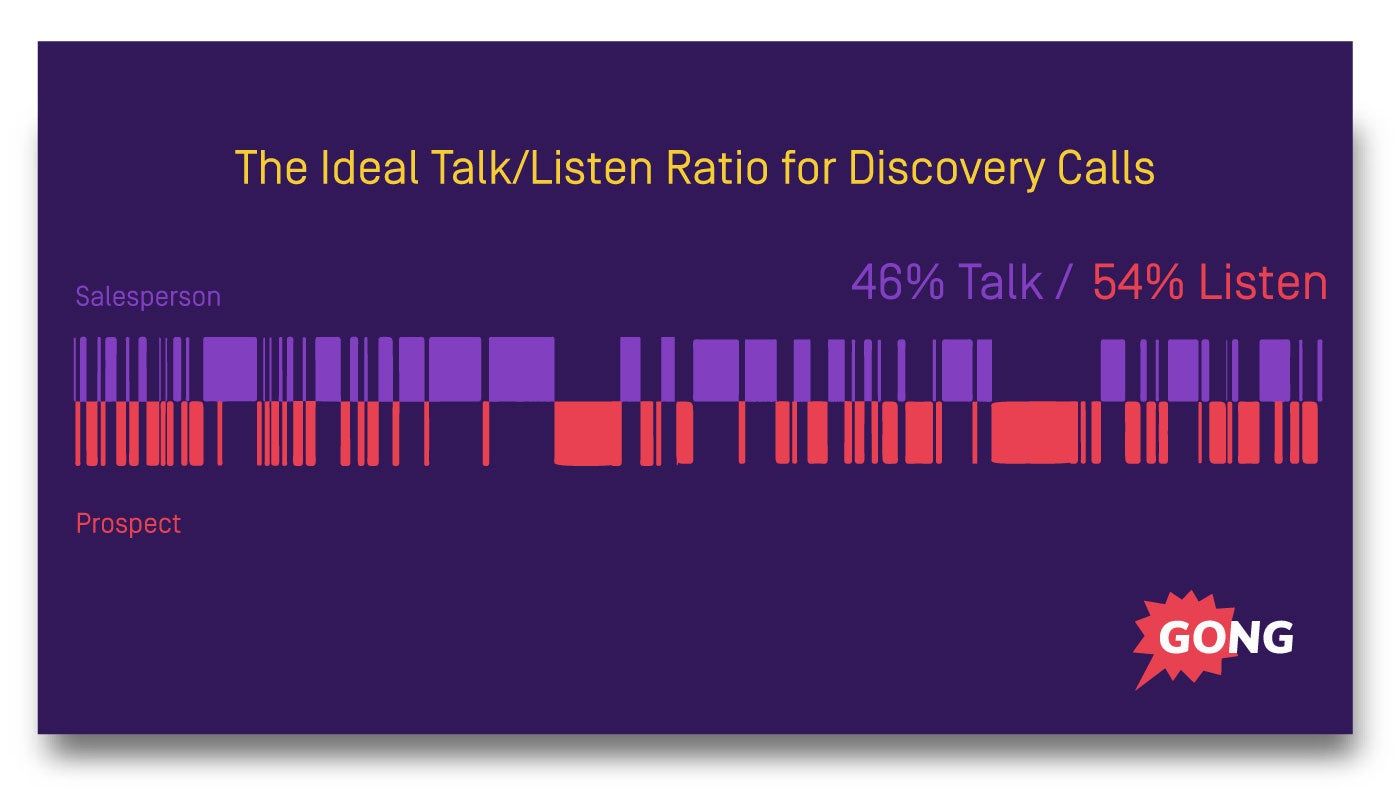
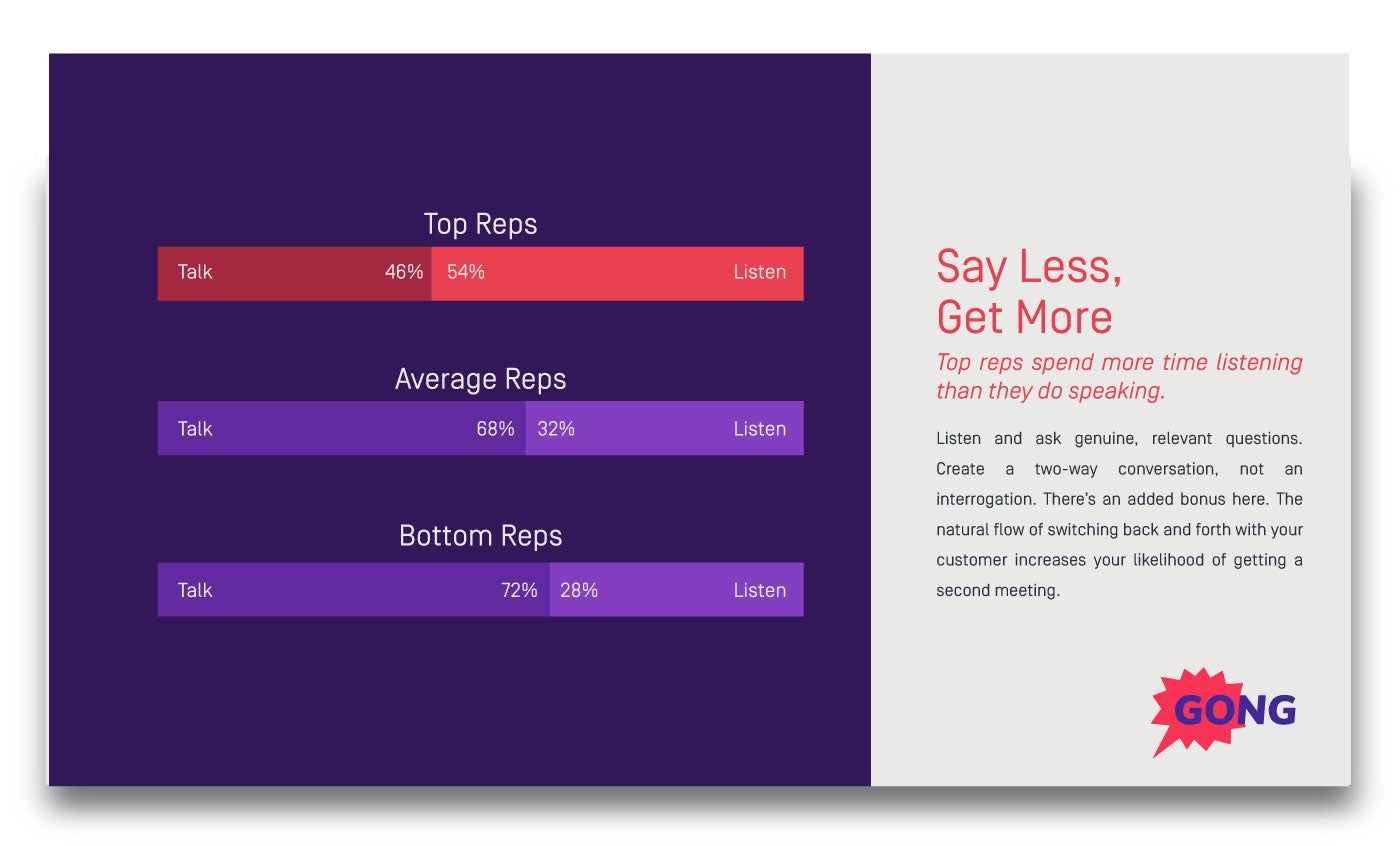

During any discovery call, it’s your job to identify either problemsorunmet opportunities.In other words, you’re looking for both painand/orgain.Now that you’ve built some rapport with the prospect, here’s how you’re going to run the rest of your discovery call.You’ll want to dive deeply into 3 to 4 customer problems, then wrap up with next steps.Why specifically 3 or 4?Looking at more than that makes all the problems seem less urgent.You also risk spreading your prospect’s focus too thin.Discussing 3-4 problems has the highest likelihood of moving the deal to the next step:When you’re unpacking those problems with the prospect, ask around 11-14 questions in total.More than that and you’ll see a diminishing rate of return.Fewer than that and you won’t go deep enough to uncover useful information:Remember though, the types of questions you ask matter.Focus on problem-related questions.Those look at the prospect’s business issues, challenges, goals, and areas of concern.They’re strongly tied to your chances of closing a deal: These sales call scripts include questions to ask on your next call. Remember, you don’t want to bombard your prospect with too many questions.You want to create a natural ebb and flow with the right number of targeted questions.Top performers intersperse their questions naturally throughout the conversation.Their average-performing peers load questions at the beginning of the conversation:Frontloading questions makes you sound like you’re going through a checklist.The last thing you want to do is sound like an interrogator.Instead, focus on having a natural conversation by listening to what your prospect is saying and asking genuine, relevant questions.There’s an added bonus by doing this.The natural flow of switching back and forth with your customer increases your likelihood of getting a second meeting:Think of the conversation as verbal ping pong.You’ll know you’re hitting the right talk-to-listen ratio when you’re listening a little more than talking:Above is where the top-performing reps sit in terms of talk-to-listen ratios on discovery calls.Here’s a look at the talk-to-listen ratios of their average and low-performing peers:Any sense of how you’re doing in this department?Check your own ratio using Gong.io.The results may surprise you. (We all talk a little more than we think we do.)If you get a shocker, at least you know exactly how to fix this.(P.S. Click the banner below to get our printable Discovery Call Cheat Sheet):
Sales Call Step 4: Present
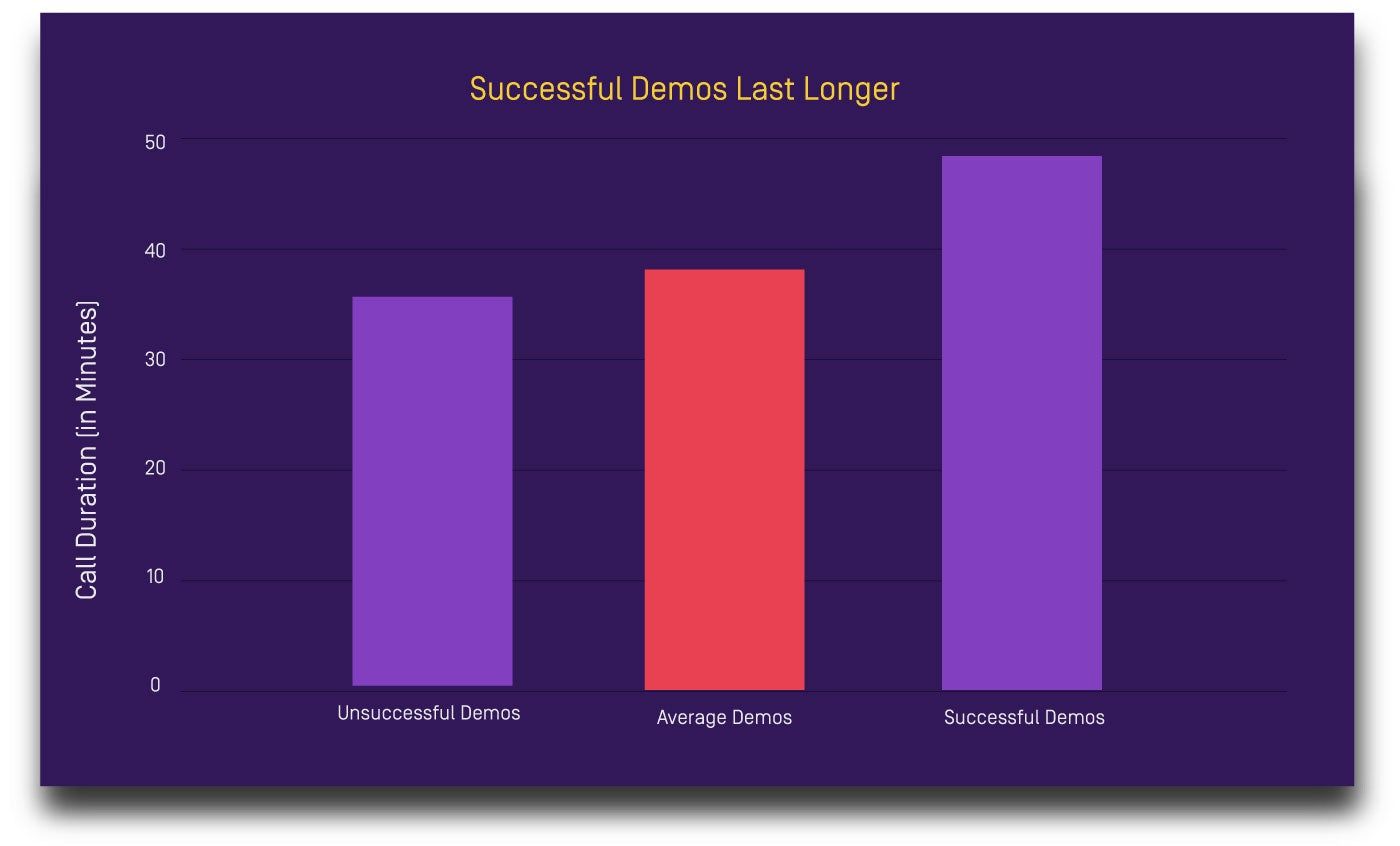
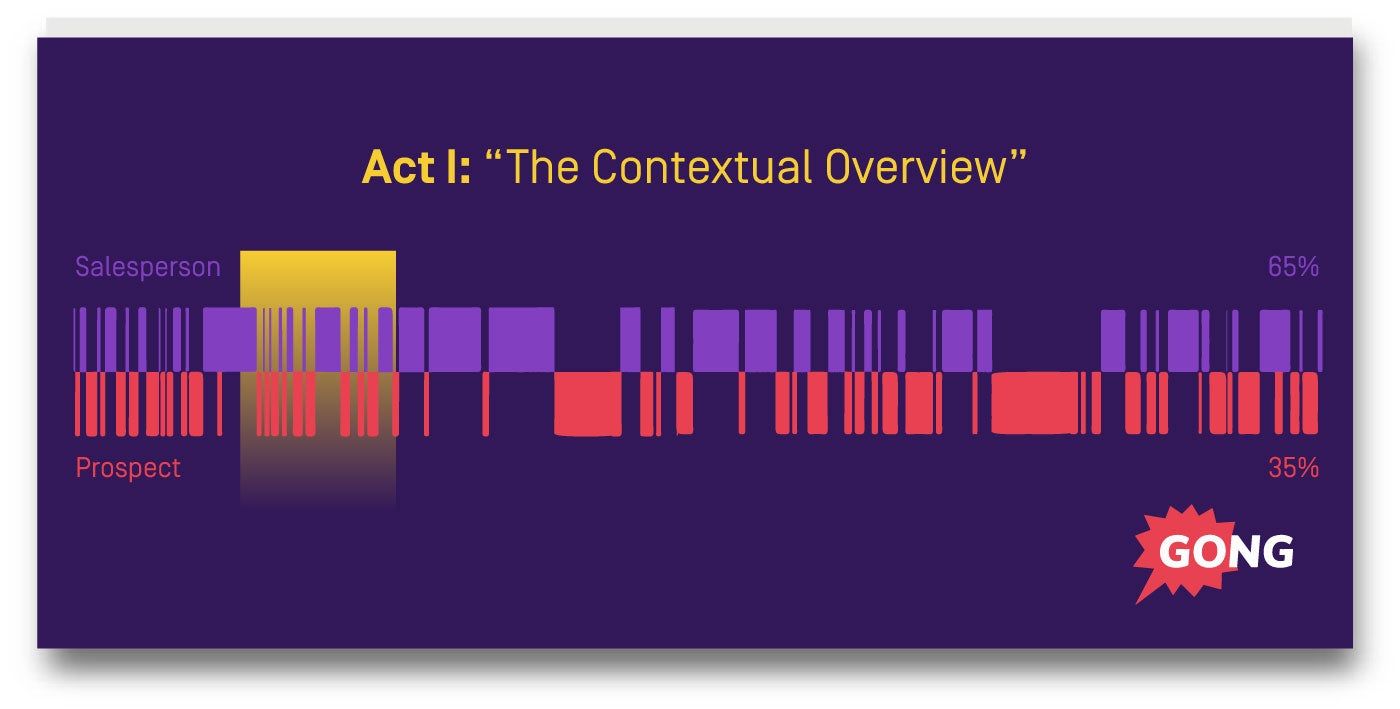
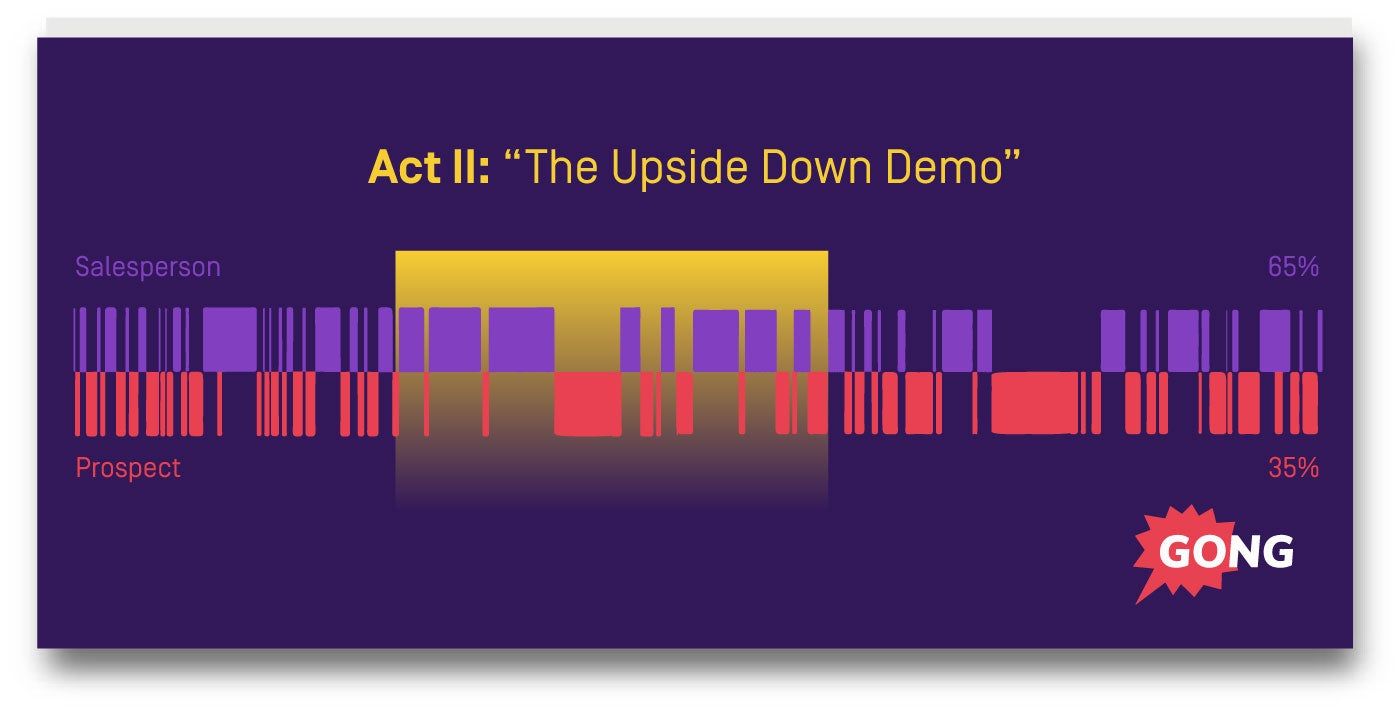
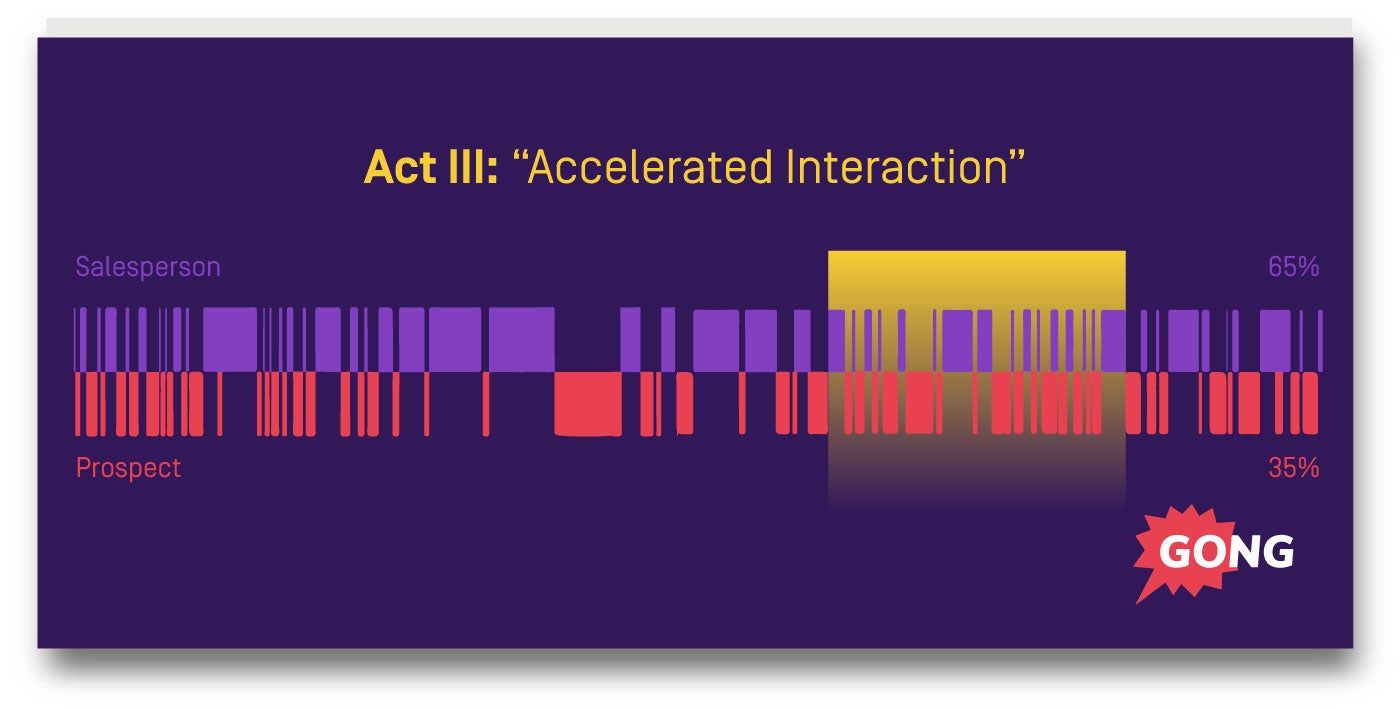

When you’re ready to present, strive to flip your presentation on its head.We’ll get towhyin a second…According to the data from 67,149 recorded sales demos, we found the following commonalities among successful presentations. Successful demo calls last 30.5% longer than unsuccessful ones:This means you shouldn’t spend all that time walking your prospect through every product feature.Instead, give them a brilliantly targeted demo that stimulates great conversation that lasts and lasts.And while the talk-to-listen ratio of that conversation doesn’t matter much, youwillwant to pay attention to your interaction patterns.Successful reps have shorter bursts of speech that allow others to jump into the conversation more often.They don’t talk for longer than 76 seconds.Using this approach also means 21% more speaker switches per minute on a successful demo.Remember that as you head into your call.First, you’ll want to set the context:Talk about industry problems, narratives, and overviews forless than two minutes.Make sure the prospect understands the problem you solve, or the reason your company exists.And as we mentioned earlier, once you head into the second part of the call, you’re ready to flip your demo upside down:How do you do this?Start with the conclusion.Don’t build up to a big reveal, rather, start with the best part.What’s that?It’s the use case the prospect talked about the most during their discovery call.If they talked about coaching for seven minutes, onboarding for four, and pipeline management for five, start the demo with the coaching use case.It will definitely snag their attention and carry you through the bulk of the call.Hit all the points you wanted to hit along the way.As you head toward the end of the call, the rate of speaker switches per minute will speed up even more, up to 36% in the second half of the call.That’s particularly true if it’s going well:The prospect’s engaged. They have questions. You have answers.It’s agreatback and forth.It sets you up perfectly to wrap up with pricing and next steps:On average, deal-closing demos discuss pricing between the 38 and 46 minute mark.(P.S. Click the banner below to get our free, printableDemo CallCheatSheet):
Sales Call Step 5: Overcome Objections
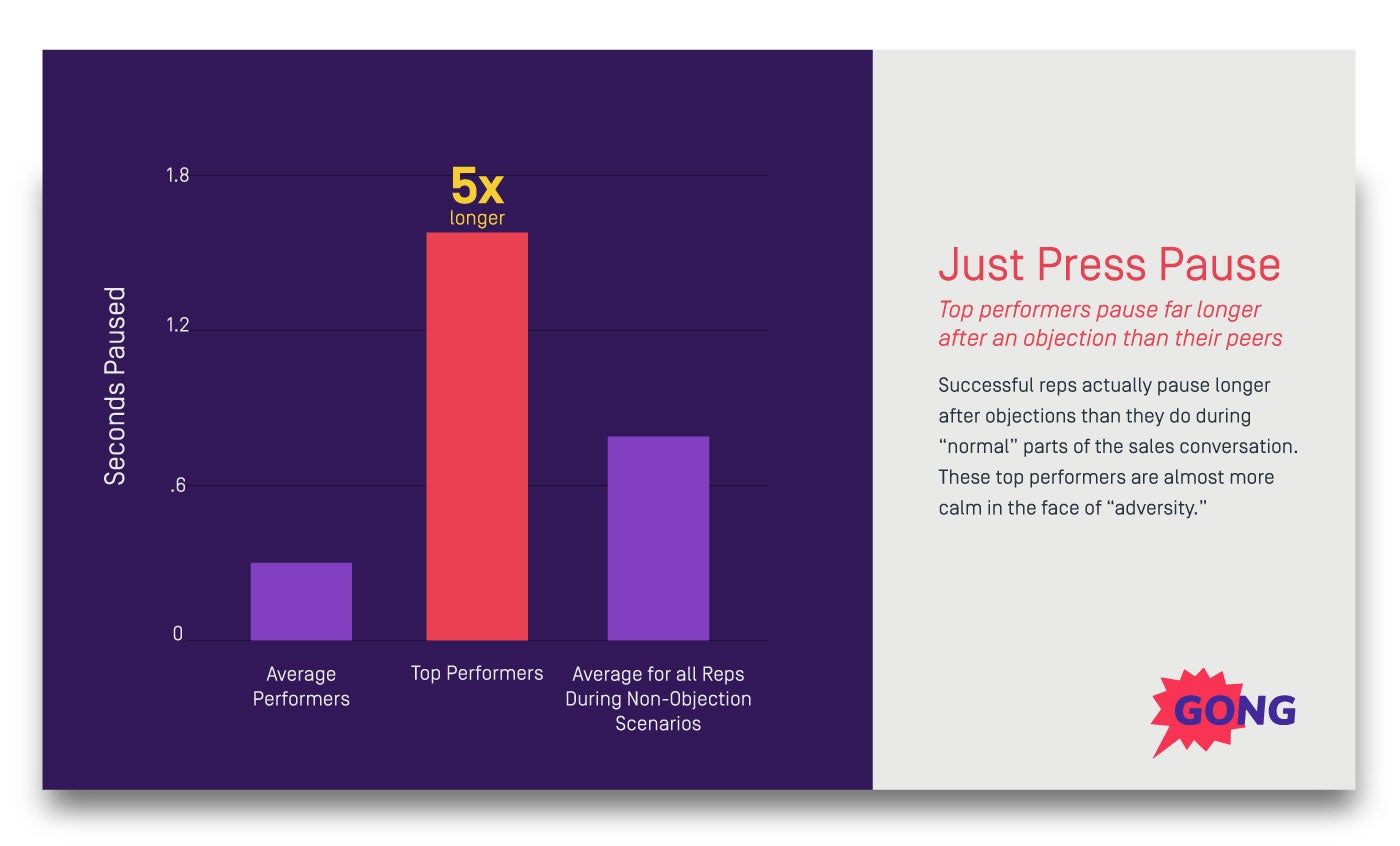
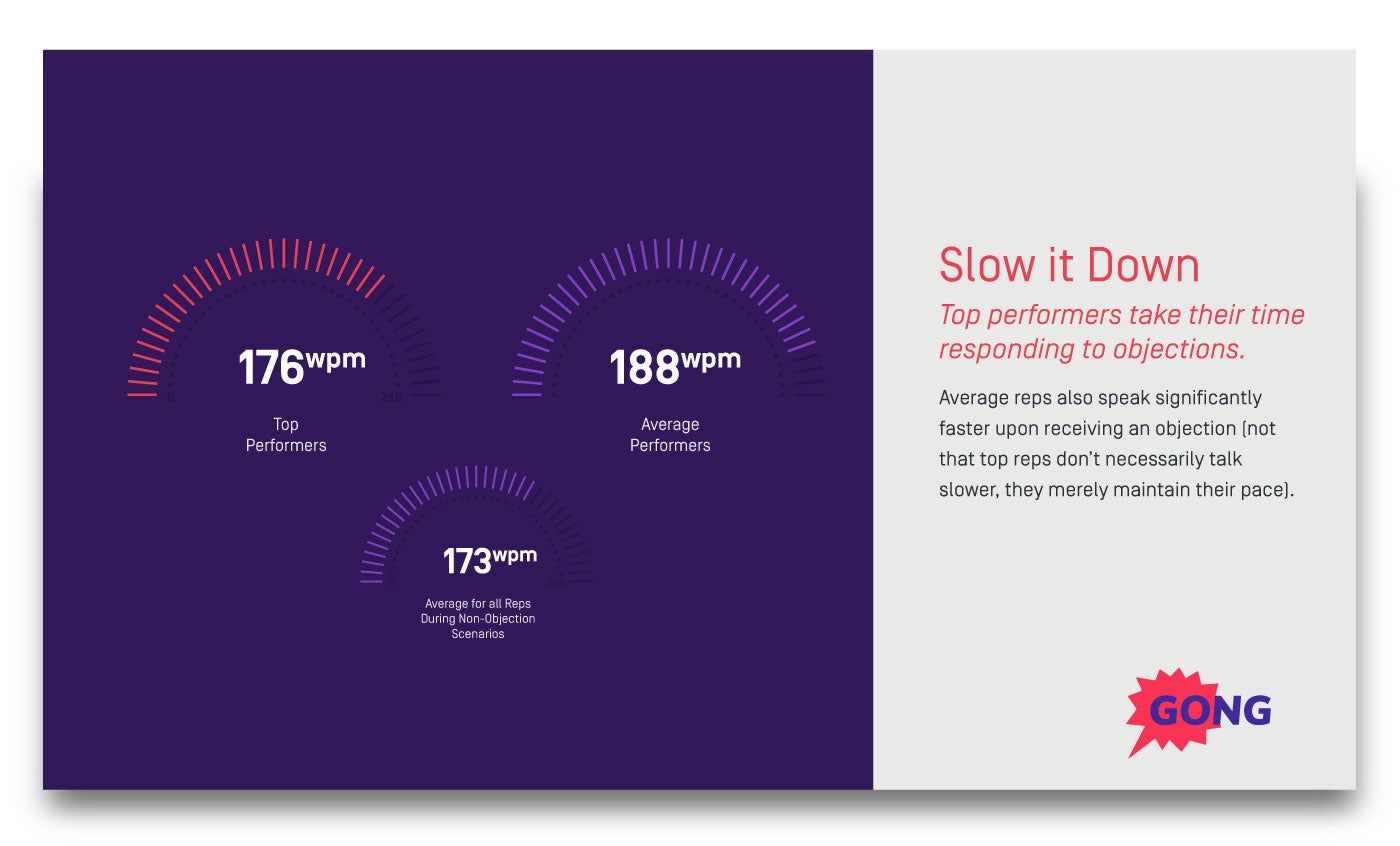
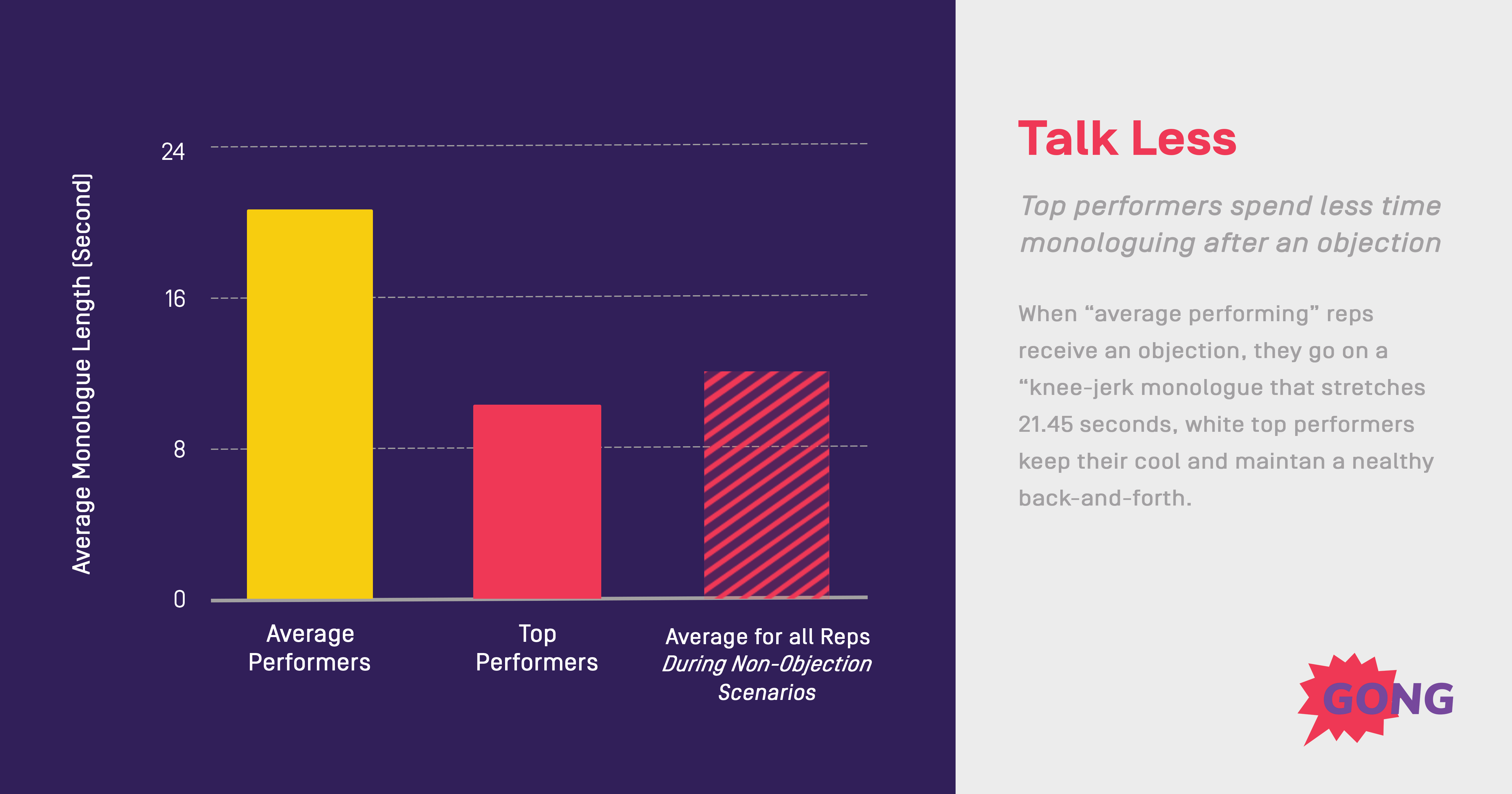
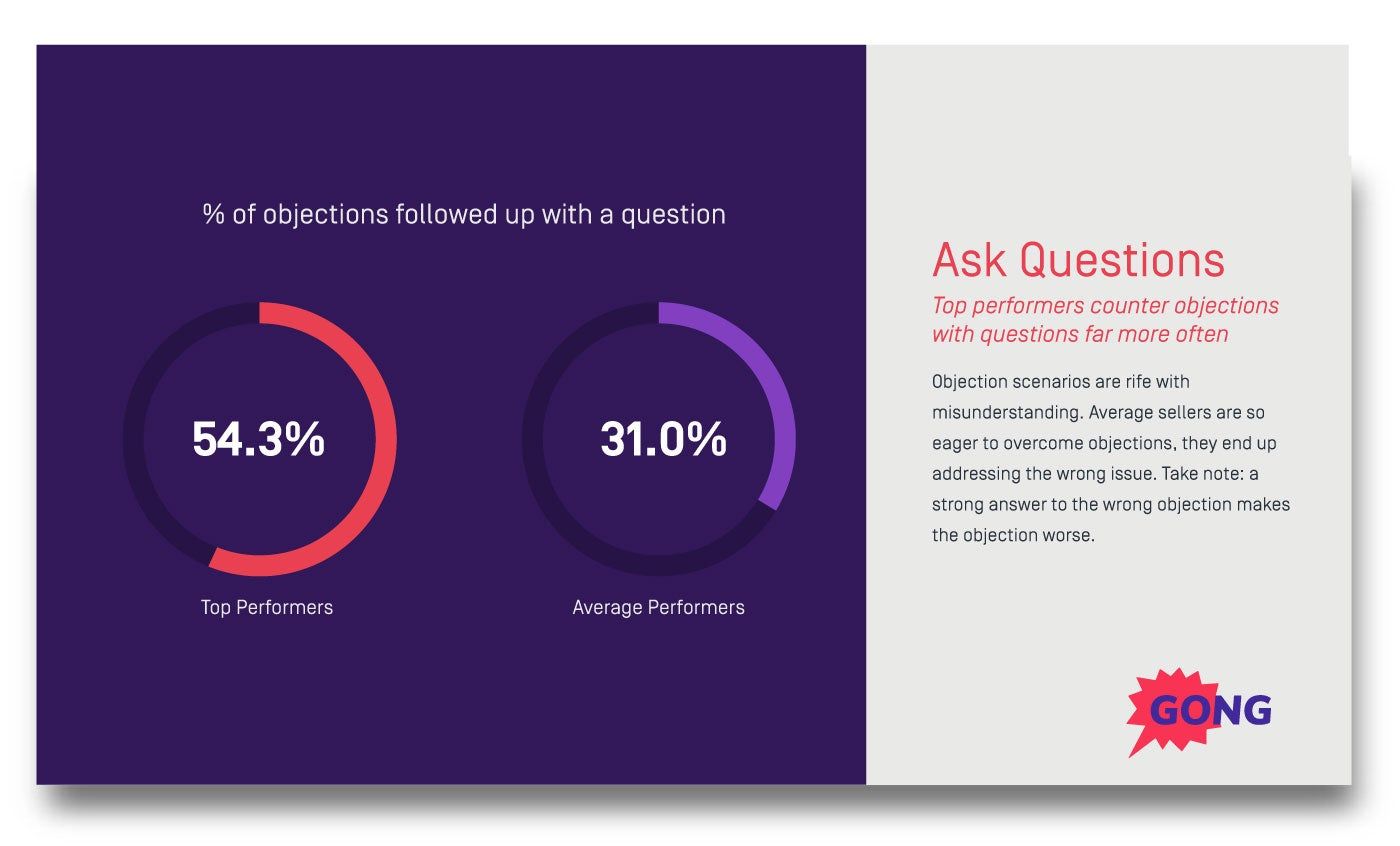
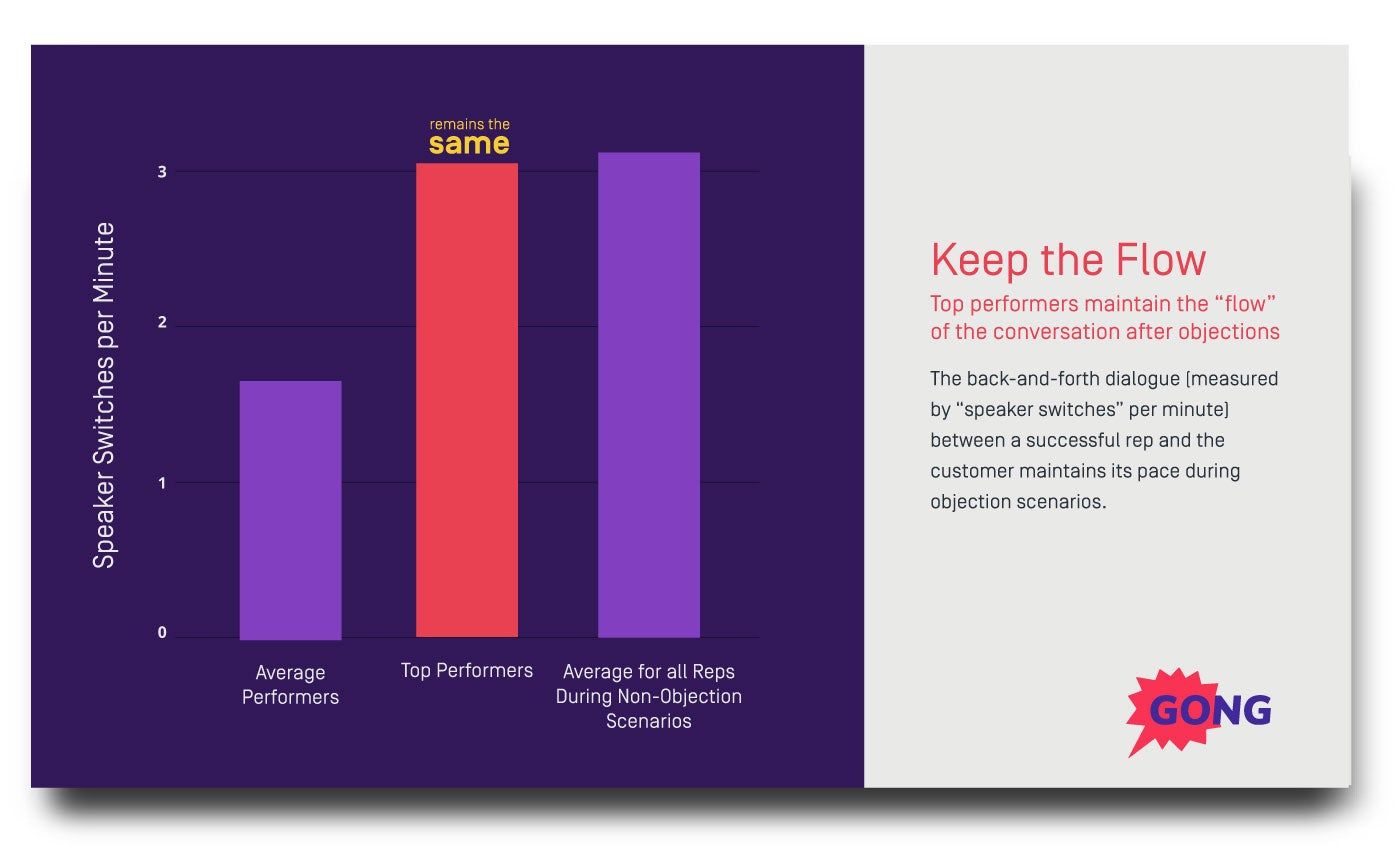
You’ve just done an amazing demo, but your buyer is voicing objections.Don’t get too up in arms.It’s a sign they paid attention and are engaged.With our objection handling techniques below, you’ll handle their objections like a walk in the park.For starters, don’t rush in with an answer the second your prospect stops talking.Pause. For waylonger than feels comfortable.Let their objection trigger you into slo-mo mode.After hearing an objection, star reps pause for much longer than their less successful peers:When you’re too eager to overcome an objection, you’re not thinking as clearly.You’re inpanicmode.Know what else happens in panic mode?You talk faster — up to 188 words per minute — instead of maintaining a standard 173-176 like a star rep:Talking in panic mode also makes you highly likely to pull a “knee-jerk” monologue for up to 21.45 seconds.A long, uninterrupted spiel is not the way to go.It’s not fun for anyone on the call.It reeks of insecurityandit’s ineffective:What’s more, reps who respond too quickly to objections often address thewrongissue.They jump in to save the day and only make things worse.They frustrate the prospect and come off looking like they weren’t paying attention.And there’s such an easy solve on this one.Ask questions:Responding in this thoughtful, inquisitive way will help you have a better conversation.It’ll create more back-and-forth flow, even when an objection is raised :Once you’ve handled the objection appropriately, bring closure by asking,“Does that make sense?”Plenty of reps loathe it, but the data has spoken.Get it into your repertoire, cause it works.Top-performing reps don’t use it more often than anyone else, but they do use it at three points in the conversation:
- Agenda setting
- Scheduling next steps
- Objection handling

It can help you close the loop and move to the next phase.(P.S. Click the banner below to get our free, printableObjection Handling Cheat Sheet):
Sales Call Step 6: Discuss PricingAfterYou’ve Established Value
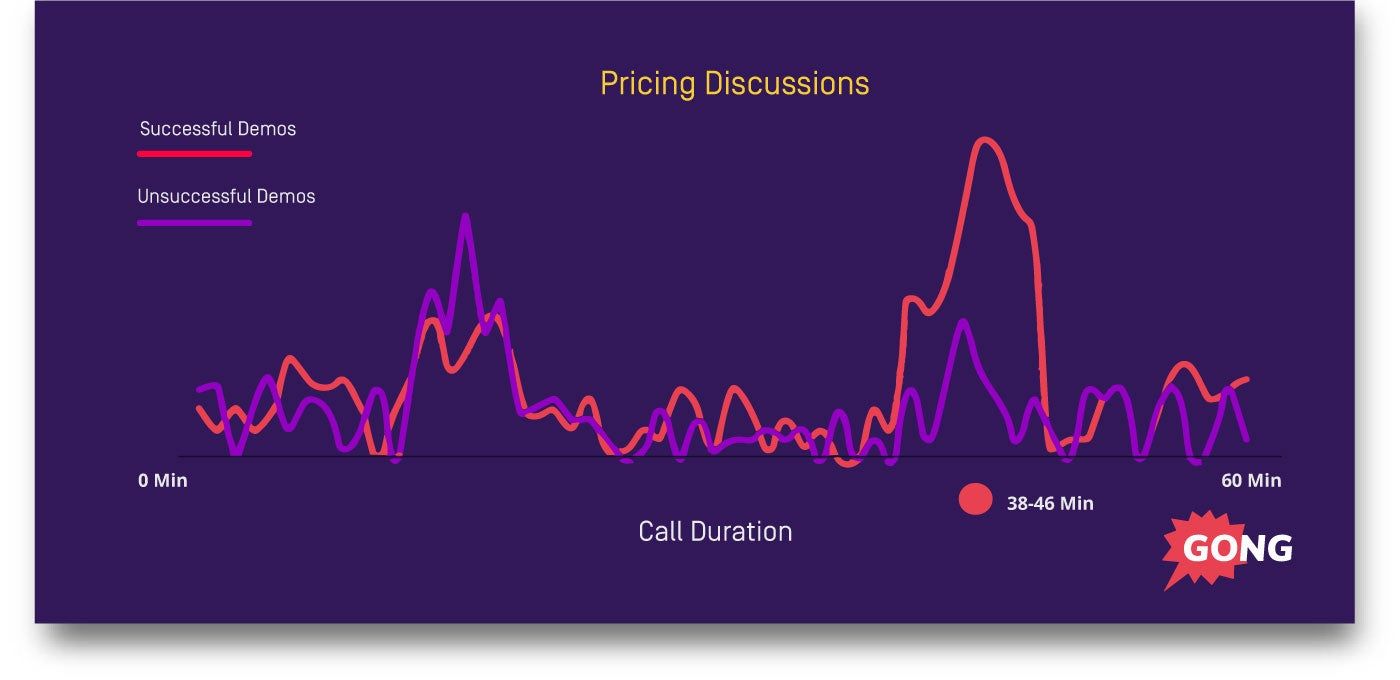
Unsuccessful demos are all over the map, but often talk about pricing way too early in the call:Because they’re unfocused, unsuccessful demos spend 8% more time on pricing than successful demos:It shouldn’t take you more than a minute or two at the end of a call to explain your pricing to a prospect.If it does, you need to streamline your explanation.
Sales Call Step 7: Secure the Next Step
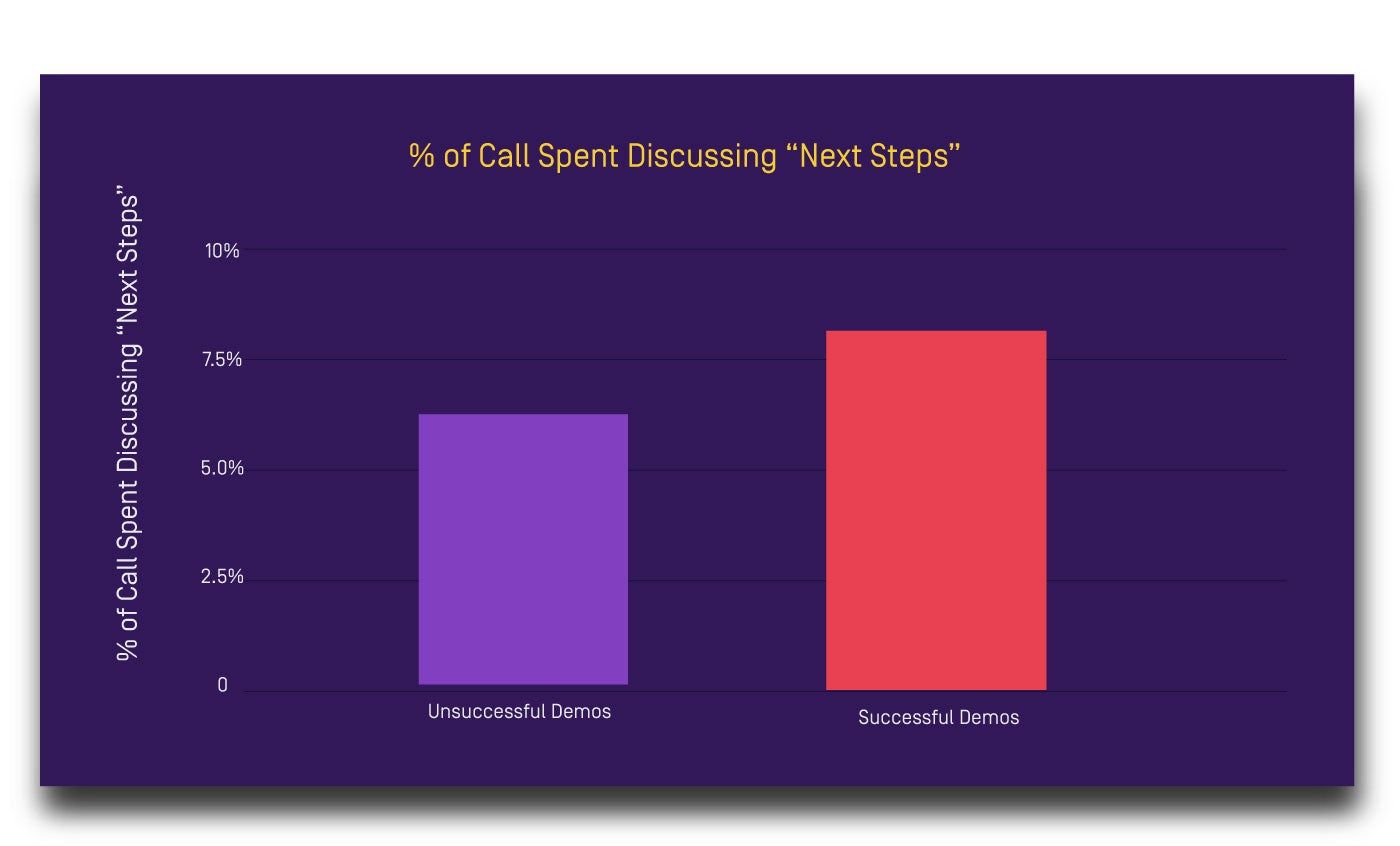
Once you’ve covered pricing, your final discussion on this call should be about next steps.Successful reps spend 12.7% more time (i.e., four minutes) on next steps than their unsuccessful peers:They know it’s incredibly important to talk with the prospect about how to move the project forwardtogether.Pro tip: Shorten your pitch and leave yourself enough time to work through next steps without rushing.You don’t want to talk about critical next steps when your prospect is rushing to get to their next meeting.Whether it’s a cold call, or you’re getting ready to close a deal, every conversation should follow pre-planned sales call steps that are meant to increase the likelihood of a desired result. [newsletter]
Sr. Manager, Web Marketing
Suchi Sahoo leads the web team at Gong, overseeing design, development, and digital strategy.
She specializes in creating high-performing web experiences that balance storytelling, UX, and technical precision.
With a focus on conversion and brand cohesion, she bridges design and engineering to deliver Gong’s digital front door for growth.
Win more with Gong
Loading form...
Discover more from Gong
Check out the latest product information, executive insights, and selling tips and tricks, all on the Gong blog.