Sales strategies
VP of Sales Success Comes Down to These Two Levers

Chris Orlob
Content Author
Published on: April 10, 2018
Last modified on: March 4, 2026
I’ve had a blast watching our VP of Sales grow revenue faster than any SaaS company I know.
Unfortunately, his results aren’t typical.
Here’s what most VPs of Sales are in for :
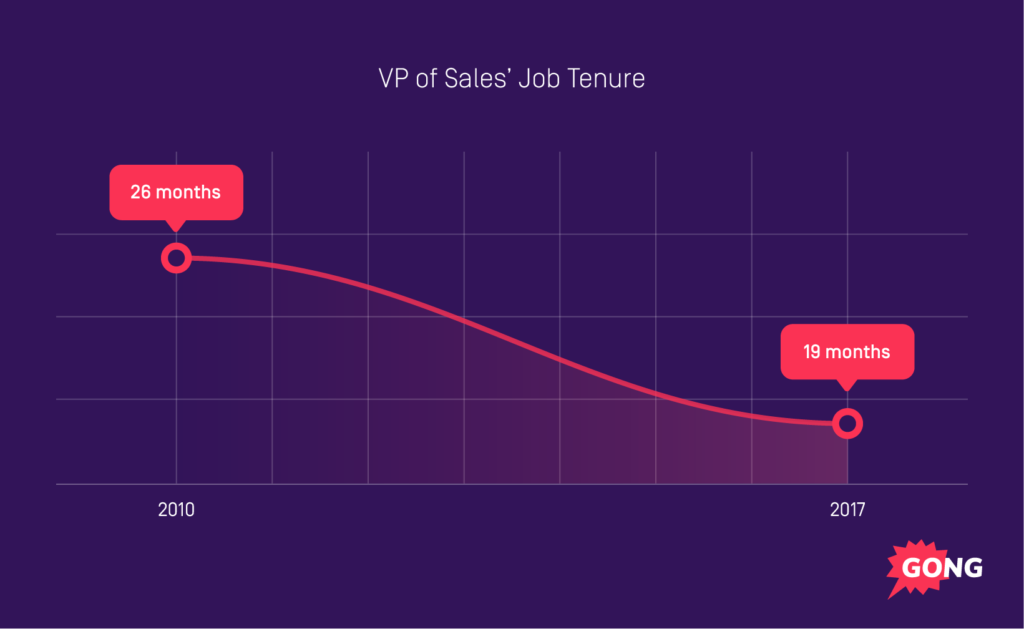
If this is your first crack at the VP of Sales job, bullseye is on your back.
Fortunately, generating more revenue issimple.(Notice, I didn’t sayeasy.)
It can be deconstructed intotwo levers:
- Moresales conversations
- Bettersales conversations
Ultimately, everything you do comes down to pulling those two levers.
But making that happen can be complex.
The best way to simplify it is bydeconstructing these levers into their component parts.
That’s how you create a predictable revenue engine.
Let’s give it a try.
VP of Sales Lever #1:MoreSales Conversations
In the quantity + quality equation, I urge you tostart withquality.
Here’s why:
If you accelerate quantity (moreconversations) without taking care of quality (betterconversations), all you are doing is accelerating the rate at which youwaste your “at bats.”
But for the sake of this post, we’ll start withquantity, since knowing your numbers up front will give you greater context for the rest of the approach.
Here we go.
The idea here isn’t to launch a brute force frenzy of activity.
It’s to understand the metrics that make up your revenue machineso you can back into your number.
Each rep should know the following numbers by heart:
Revenue Number
This is your (obvious) starting point.
Clarify your goal so you can reverse engineer the metrics.
What’s your goal for the quarter or the year?
Let’s say it’s$150k per quarter, per rep.
Average Deal Size
Knowing your average deal size tells youhow many dealsyou need to make your number.
I’m shocked by how many reps don’t know their own average deal size.
Following along with the example…
Let’s say your average deal size is$18,750, youneedeight deals per quarter, per repto make your number.
Again, each rep should know their own stats.
The difference between being a salesprofessionalvs. just a salesrepis knowing these metrics so you can back into your number.
Close Rate
Knowing your close rate tells youhow many qualified opportunitiesyou needto make your number, given your quota and average deal size.
A 20% close ratemeans you need40 qualified opportunitiesto enter your pipeline (if we’re still using the same example as above), since40 * 20% = 8 closed deals.
Each of those opportunities must be generated early enough so they can be closed within the quarter in question.
In other words, if you have a 90-day sales cycle and you’re already two weeks into the quarter, new opportunities will only help your numbers in thenextquarter.
Marketing-Sourced vs. Sales-Sourced Pipeline
Now that you know your numbers, including the required 40 opportunities, get your forecast from demand generation.
How many of those 40 qualified opportunities can you expect from marketing?
Is it 30 per rep, per quarter?
Once you have that number, you can figure out exactly how many opportunities each rep needs to source on their own.
Knowing these numbers is amuchmore intelligent way to approach the quantity game.
Now you can dial up the volume (moreconversations) in a more strategic manner.
And as I stressed earlier,each rep should know his or her individual numbers.
It will vary per rep.
The true pros knowhow many hoursworth of prospecting it takes them to generate one opportunity.
It helps them prioritize their time and plan their days.
And your job of course as the sales leader is to know these numbers in aggregate.
Let’s take a quick breather.
If only the VP Sales job were this easy, right?
If only knowing your numbers and executing the right volume of activity would automatically enable you to back into these numbers.
But reality isn’t so smooth.
Doubling your activity rarely doubles your revenue.
That’s why thequalitygame — though tougher to measure —- is where all your leverage lies.
VP of Sales Lever #2:BetterSales Conversations
Now you know the metrics that run your engine.
The next step is to funnel demand into a rhythmic sales process that every rep is equipped to execute effectively.
Map the Sales Process
Since sales conversations are the most pivotal elements of the sales process, the most important part of getting this step right is mapping out thetypes of conversationsthat happen throughout your sales process.
Your map might look something like this:
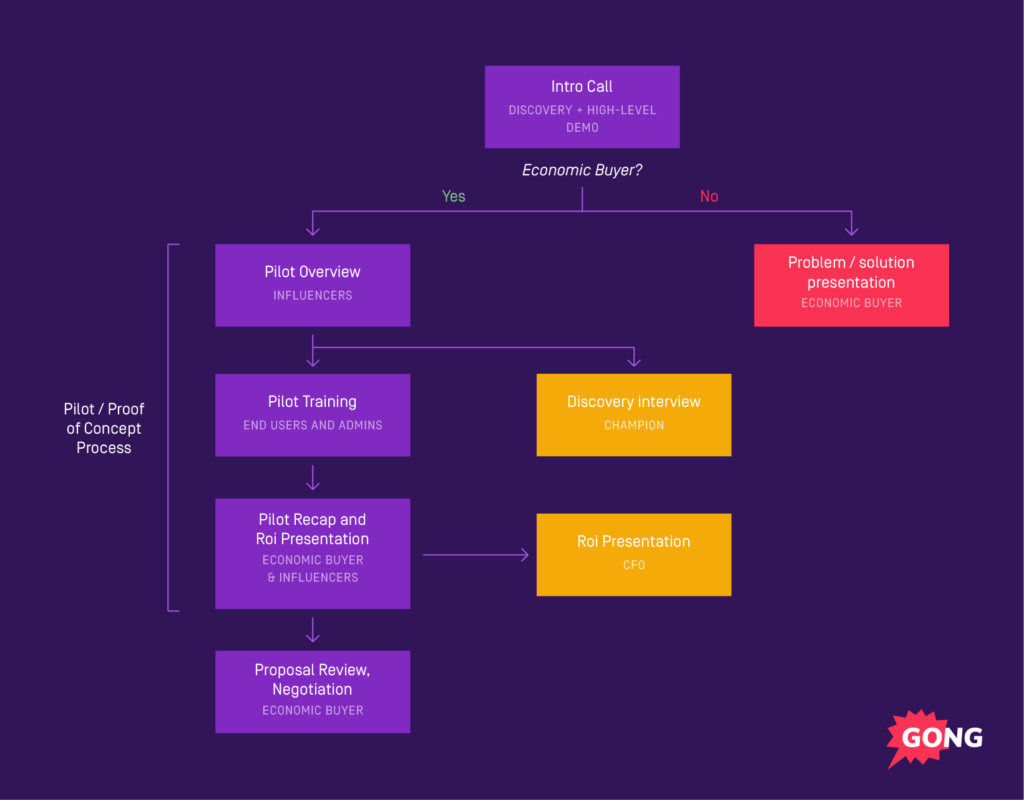
While this example is good food for thought,every sales team has their own unique sales conversations.
You’ve got to identify theseand understand the nuances of each one.
Off-the-shelf generalizationswill notcut it here.
Help Reps Understand What “Good” Looks Like
Having identified your own unique scenario-based sales conversations, you can nowequip your repsto execute them effectively.
Show them exactly what good looks like in each type of conversation they’ll have.
Here are some points you’ll need to address:
What does a “good” discovery call look , feel, and sound like?
- What questions do you ask?
- What responses are you looking for?
- Which are the highest leverage pain points to dig into?
How do you handle objections ?
- What are the key objections you’ll encounter on each type of call?
- What does a “good” response look likein reality, not just on paper?
How do you run a solid demo ?
- What does a good demo look like?
- How does the flow change for each buyer persona and at each stage of the sales cycle?
- What messages must be delivered?
- How do you transition from one key point to the next?
The best way to equip reps to understand what “good” looks like is by giving thema repository of call recordings to learn from.
Build a call recording library with a different folder for each type of call in your map:
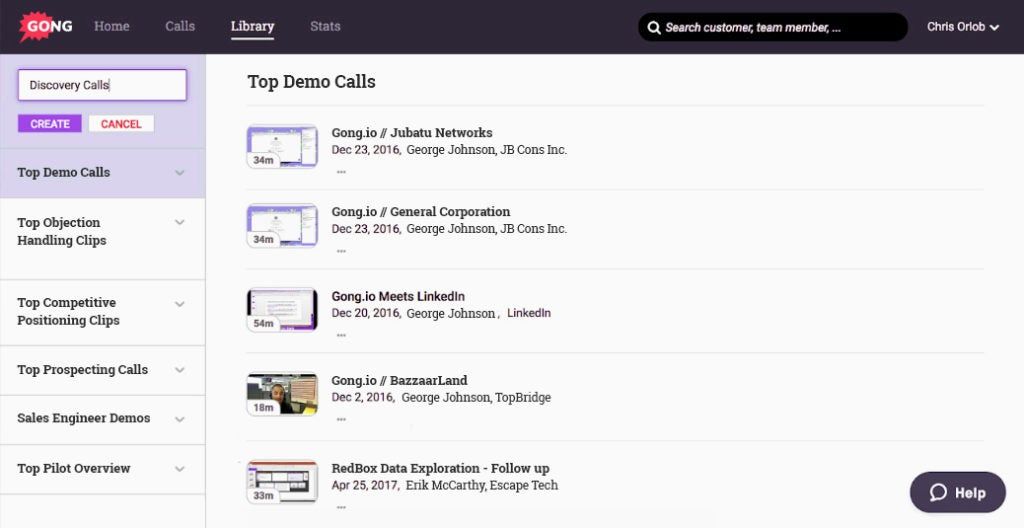
Doing this gives your reps space toreviewthese recordings on their terms and get astrongersense of what “good” looks, feels, and sounds like.
This isespeciallycritical in helpingnewhires ramp upfast.
Call shadowing is another option, but you’re rolling the dice and hoping they listen in on decent calls. It also doesn’t scale well.
(Quick“P.S.” Conversation intelligence technology is easily your best option for building an effective call library.)
Certify Your Sales Conversations
So many would-be sales leaders skip this step.
Once youandyour reps understand what “good” looks like in every conversation during the sales cycle, the next job is tocertifyyour sellers on their messages, call flow, and behaviors for each of those calls.
Certification is done in two parts:
- In arole playsetting
- In alive firesetting
Role play involves a rep conducting a mock sales call to their manager and having the manager assess their performance against a predefined list of success criteria.
The live fire setting is similar, but the rep conducts a live call with a qualified prospect while the manager assesses their performance.
It’s best to review and score arecording of the call(see graphic below), but it can also be done via call shadowing in a live environment.
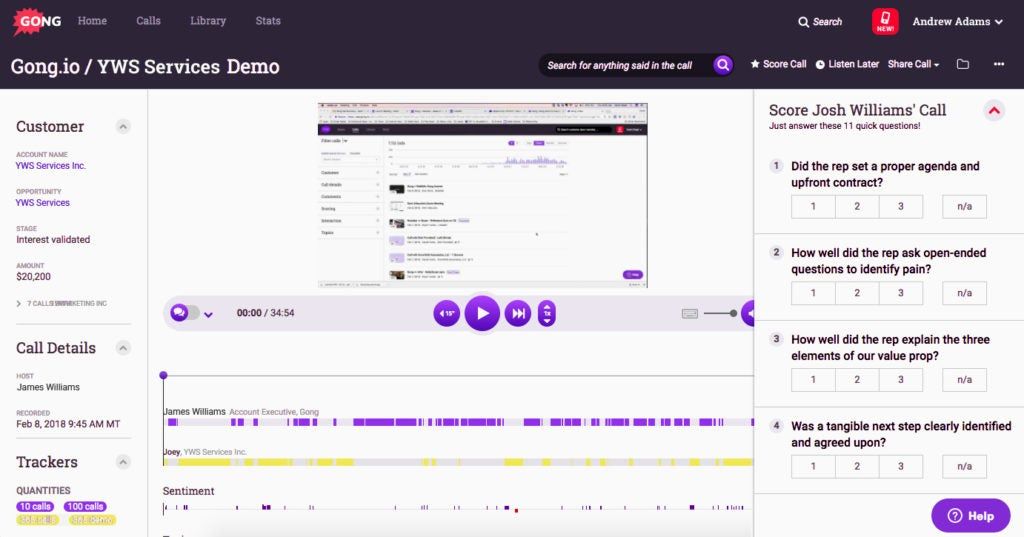
Certification is a highly personalized issue and could make up an entire post in and of itself, so I’ll avoid going into more detail here.
Optimize
You’ve now gotten through the bulk ofimplementingyour revenue generation program.
Now you can switch tooptimizingwhat you’ve implemented.
Do this in four steps:
- Assess
- Iterate
- Coach
- Repeat
Assess
First, you need insight into what’s going on.
Look at the processes you designed earlier and ask yourselfwhat’s working and what’s not working?
Being able to answer these questions is why visibility into sales conversations is so critical.
Iterate
Once you’veassessedwhat’s working and what’s not, you need toincorporatethose insights into your standardized process.
If your changes are sweeping, you may need to go back andrecertify the team on the new process.
This is a frustrating but inevitable part of building a predictable sales machine.
Coach
Assessment is about evaluating theprocessesyou designed.
Coachingfocuses on evaluatingeach rep’s execution of those processes.
Again, coaching is an issue that goes far beyond the boundaries of this post.
For now, here are two takeaways:
- Understandwhere coaching fitswithin the larger process of your revenue generation engine (which this post has aimed to outline)
- Review your reps’ sales calls.
These two steps will put you in a league of your own when it comes to coaching effectiveness.
Even though coaching is onlyoneelement in the larger process,it’s the linchpinthat makes it all work.
Leaving it out is like removing the foundation from a house of cards.
Repeat
If only things were so simple and you only had to do this once. (Haven’t I said that once already?)
The best VPs of Sales continually optimize their teams and processes by assessing, iterating, and coaching over and over again.
Every now and then, even they have to take their teams back through steps like certification or re-architecting the sales process.
Some Parting Advice
Phew!
That wasa lot.
Even so, each of those distinct tasks rolls up into the two levers mentioned at the start of this article:
- Moresales conversations
- Bettersales conversations
And if there’sonething that can help you move them forward, it’s this:
Show your reps what “good” looks like for each type of sales call they’ll encounter, and be sure they can execute it.
Thosesales conversations are where your deals are won or lost.
Getting insight into what “good” looks like for each type of sales call can be a huge challenge, especially if you don’t have visibility into your team’s sales calls.
That said, thereisa simple starting point for you.
The team at Gong.ioanalyzed over 1M B2B sales call recordings. They used AI to understand what highly successful sales reps do differently from their peers.
One insight the team surfaced is that star reps talk about pricing late in their sales calls:
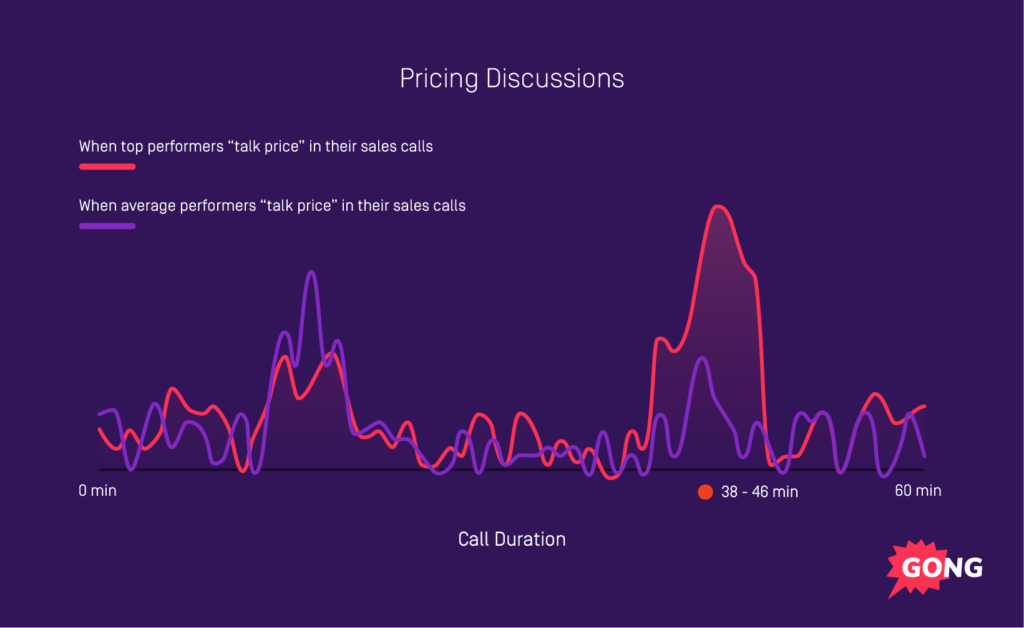
It’s stunning to see how much earlier average-performing reps mention pricing.
Star reps also havestrikinglydifferent talk-to-listen ratios during their discovery calls:
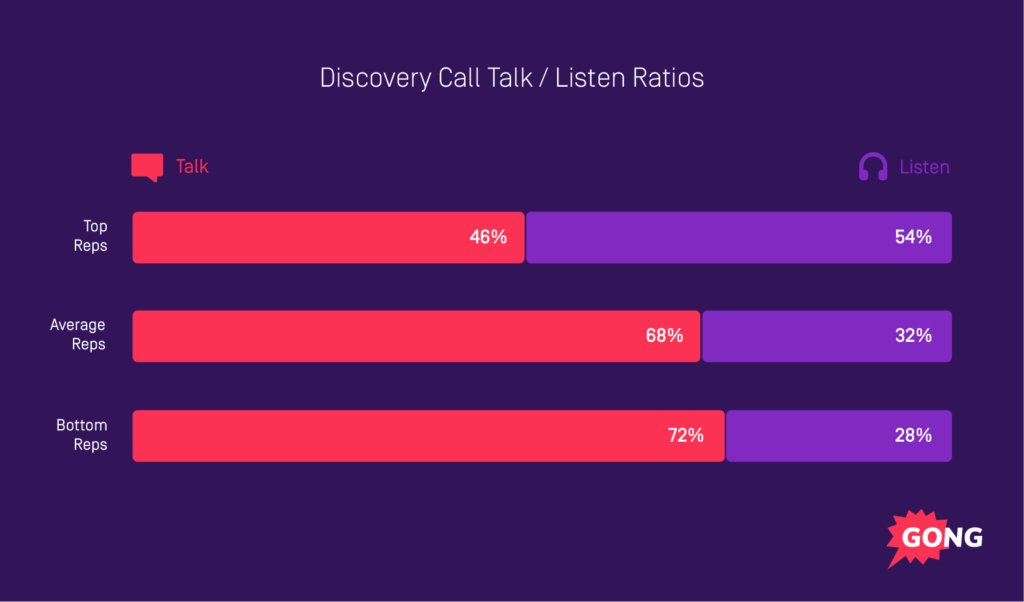
The Gong team hasmanymore insights just like these.
All fromone massive, data-driven analysis of 1M sales calls.
These insights serve as agreatstarting point to get your team on the right track in their sales conversations.
The rest of the insights are available in this new, free ebook :
Download it here: 9 Elements of Highly Effective Sales Conversations.
Send it to your reps.
It’s a great way to set what you’ve learned in motion.
Content Author
Chris Orlob is the Co-Founder and CEO of Pclub.io, a leading sales training platform designed to help sales professionals accelerate their revenue growth. He is best known for his pivotal role at Gong, where he helped scale the company from $200,000 to $200 million in ARR, contributing to a $7.2 billion valuation. During his tenure at Gong, Chris led the creation of Gong Labs and excelled in various go-to-market roles. Today, through Pclub.io, he leverages his deep expertise in sales and revenue operations to coach over 11,000 SaaS sellers.
Win more with Gong
Loading form...
Discover more from Gong
Check out the latest product information, executive insights, and selling tips and tricks, all on the Gong blog.