The extra-hour effect: sales follow-up jumps nearly 4% after daylight saving fall back

Hayden Jardine
Director, Marketing Analytics, Gong
Published on: October 30, 2026

This weekend, clocks across most of North America fall back an hour. For most people, that means an extra hour of sleep and a strangely dark commute home.
For sales teams, it may also mean something more useful: a short burst of momentum.
Gong Labs analyzed sales activity around the 2024 and 2025 daylight saving time changes. The week after clocks fall back, deals move forward a little faster. The week after they spring forward, the opposite happens, and mornings take the biggest hit.
The week after fall back: more follow-up
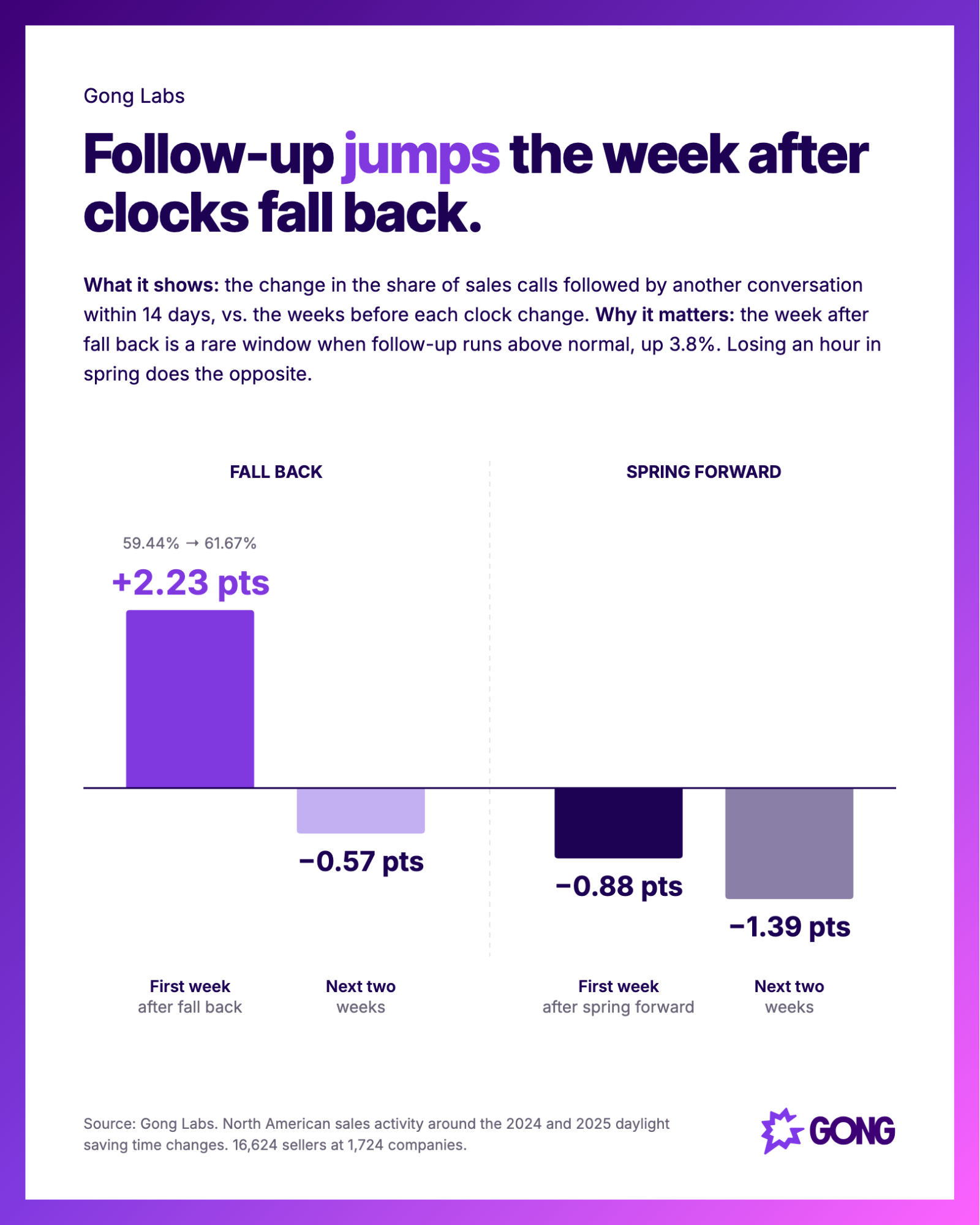
In the first working week after fall back, the share of sales calls followed by another conversation within 14 days rose from 59.44% to 61.67%.
That's an increase of 2.23 percentage points, or a 3.8% relative lift. The pattern showed up in both years, across sellers at 1,724 companies, and the increase was statistically significant.
The boost didn't last. In the two weeks that followed, follow-on call rates dipped slightly below where they were before the clock change.
Spring forward: the sales hangover
Losing an hour tells a different story. Follow-up call rates fell in the first week after spring forward and continued to decline over the next two weeks.
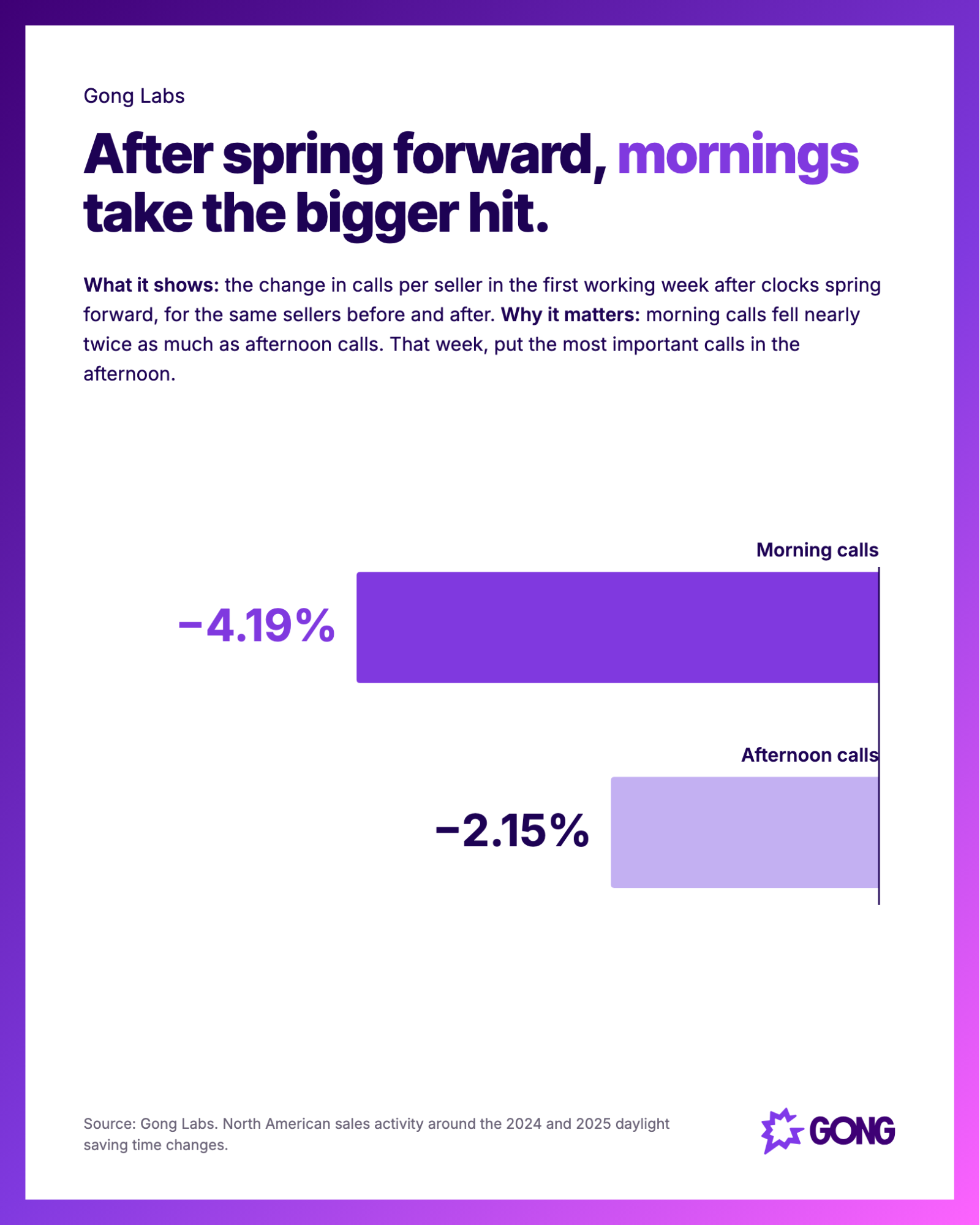
Mornings felt it most. In the first working week after spring forward, morning calls per seller fell 4.19%, compared with 2.15% in the afternoon. The morning drop was nearly twice as large.
That comparison tracks the same sellers before and after the change, morning versus afternoon, and the difference was statistically significant. Put simply, the same reps were noticeably less active in the morning once they'd lost an hour.
A few more no-shows, either way
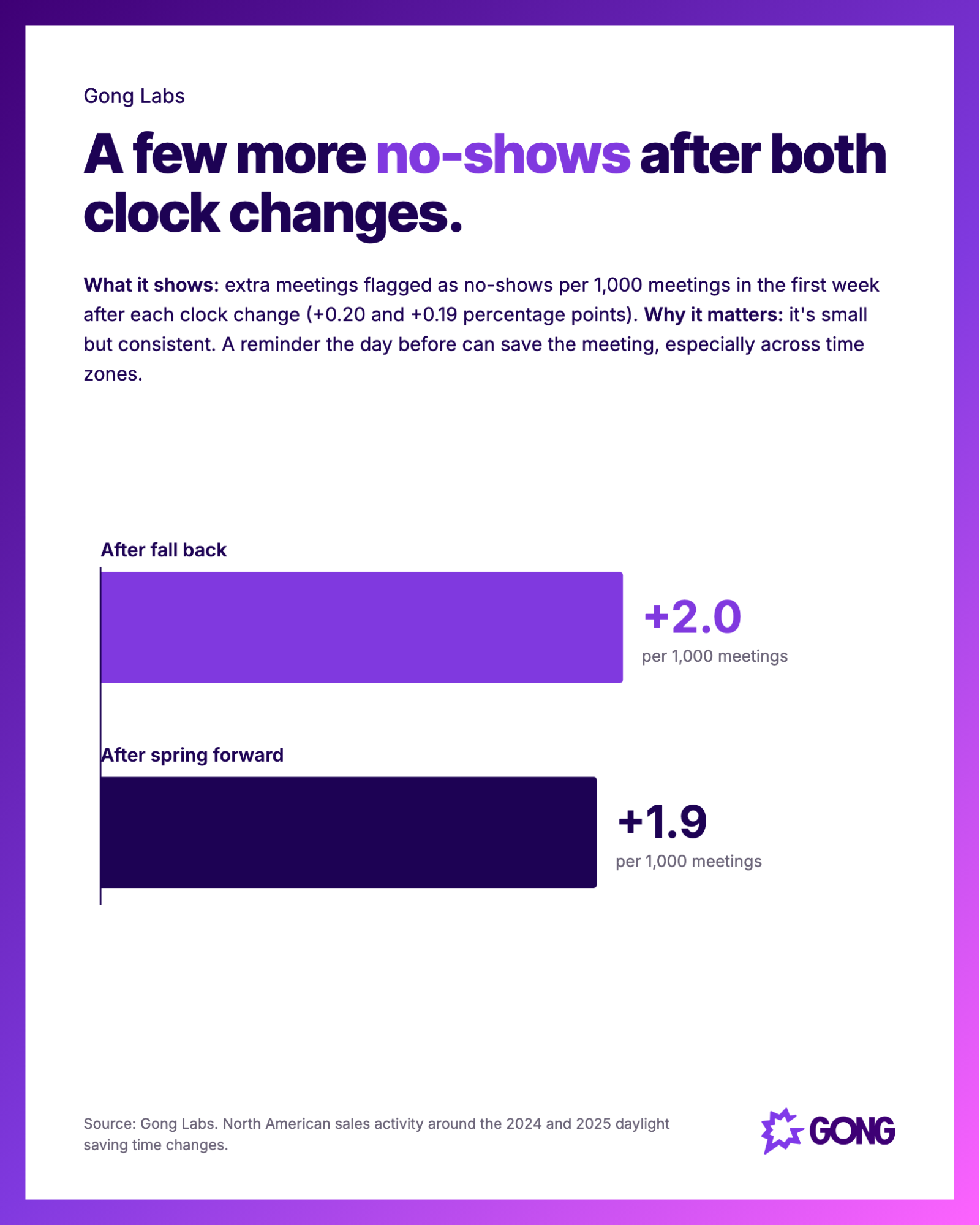
Clock changes also coincided with a small rise in missed meetings. In the first week after both transitions, meeting no-show flags rose by about 0.2 percentage points, or roughly two extra no-shows per 1,000 meetings.
It's a small effect, but a consistent one. Both increases were statistically significant across the full week. The first Monday morning on its own, however, didn't show a significant jump, so the disruption seems to spread across the week, not just show up when everyone first wakes up confused.
What this means for sales teams
Use the week after fall back. It's a rare window when follow-up momentum runs above normal. That makes it a good week to book next steps, re-engage quiet deals, and lock in timelines before the holiday slowdown.
It also lands at the right time. Fall back comes just before the Thanksgiving squeeze, when our research shows "let's revisit in January" language starts climbing fast. A strong push that week can help secure decision dates before the year-end deferrals begin.
Protect mornings after spring forward. If your team's energy dips in the mornings that week, schedule your most important calls for the afternoon, and give reps a little room to adjust.
Confirm meetings around both changes. A quick reminder the day before can save a meeting, especially across time zones where one side has changed clocks and the other hasn't.
About the research
Gong Labs analyzed sales activity around the 2024 and 2025 daylight saving time transitions in North America. Call activity measures eligible recorded calls. Follow-on calls measure whether another recorded conversation happened on a linked deal or account within 14 days. No-shows are based on system flags.
Director, Marketing Analytics, Gong
Hayden leads research at Gong Labs, turning Gong's data into actionable insights for revenue leaders. He is a Gong veteran of 5+ years and former data scientist.
Win more with Gong
Loading form...
Discover more from Gong
Check out the latest product information, executive insights, and selling tips and tricks, all on the Gong blog.