Sales strategies
The average VP of Sales tenure has shrunk — here’s why

Chris Orlob
Content Author
Published on: January 29, 2018
Last modified on: March 4, 2026
The VP of Sales’ average tenure has steadily declined the last seven years.
Once standing at a healthy 26 months, it’s now just 19 months.
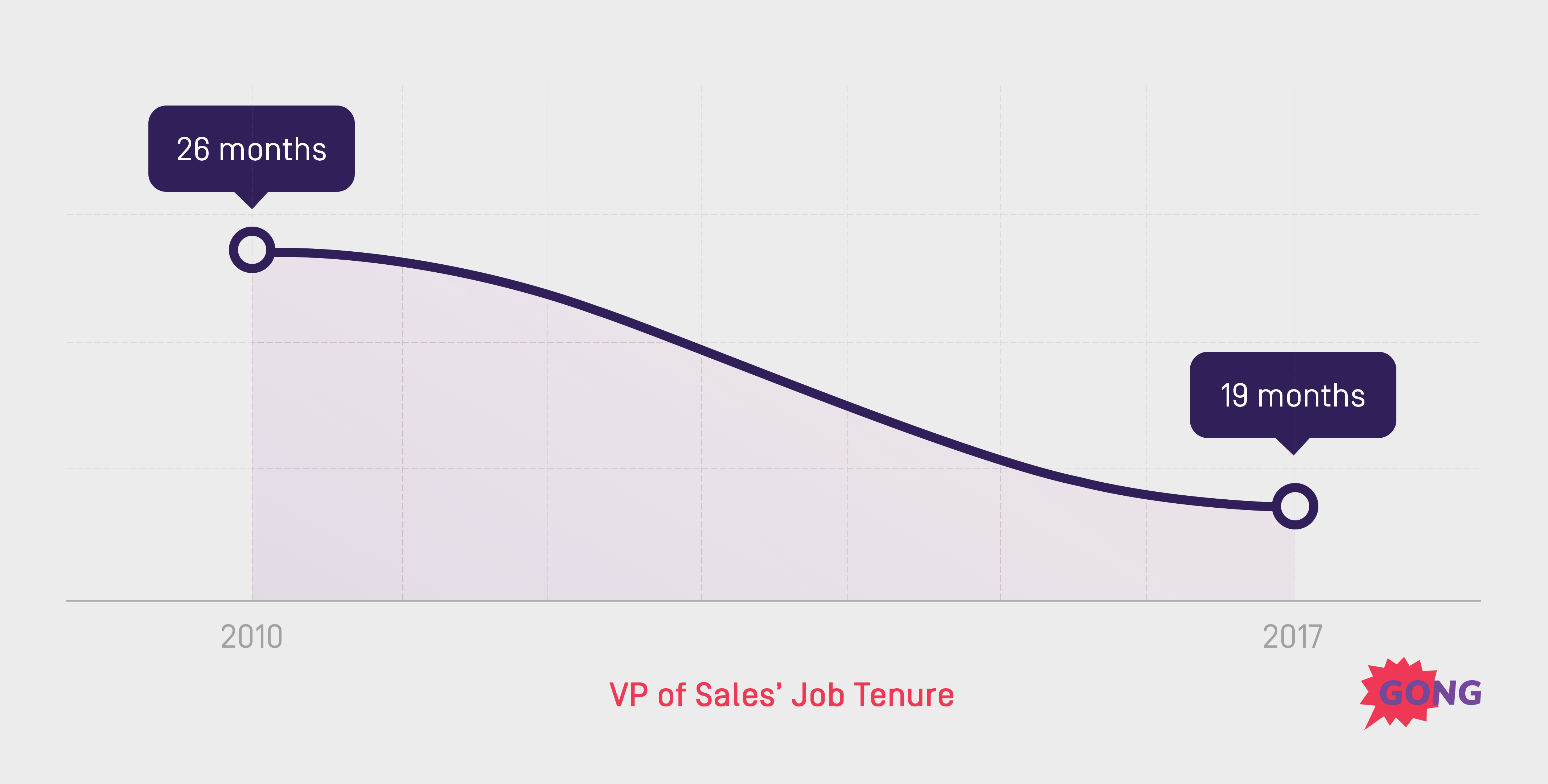
7 months of tenure have evaporated.
19 months on the job isn’t much time to make the impact you’re committed to making.
This equates to a few quarters of getting up to speed, a few quarters of giving it “the old college try,” and a few quarters planning your exit strategy.
Here’s How We Got Here
In parallel to this tenure decline, we have another downward trend.
Thepercentage of reps attaining quotaon the average B2B sales team has steadily declined over roughly the same time frame.
Once standing at 63%, it’s now down to 50%.
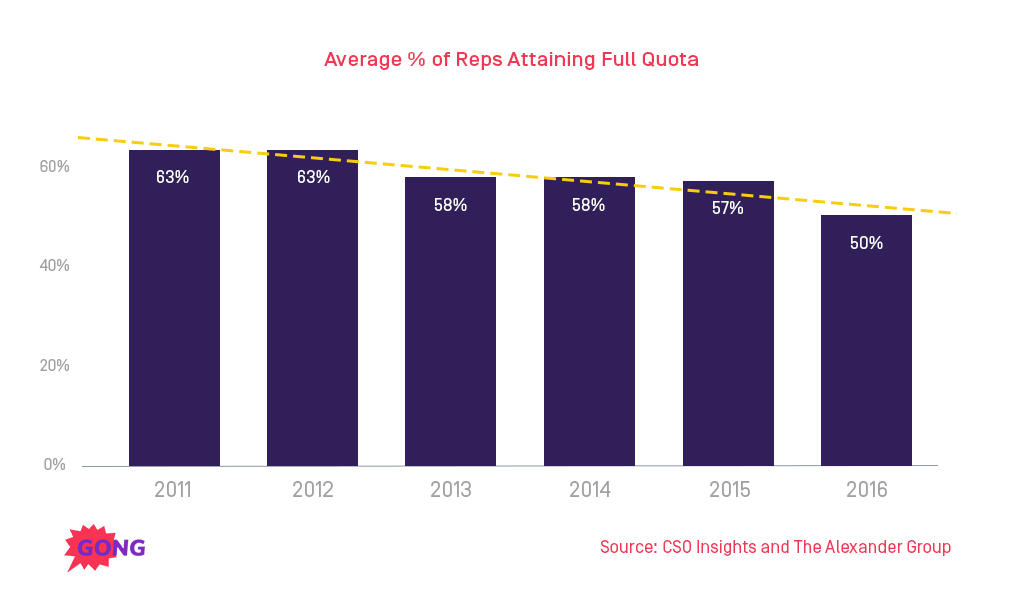
In other words, if this trend continues in 2018,half of your team will make the grade, and the other half won’t.
Anyone who’s spent enough time in sales leadership will recognize that these two trends are tightly intertwined.
The VP Sales Career Killer
The declining percentage of reps making quota can otherwise be described as the “sales performance gap.”
It’s the delta between your top reps, and your “middle-of-the-pack” (those that are below quota, but high enough to show potential).
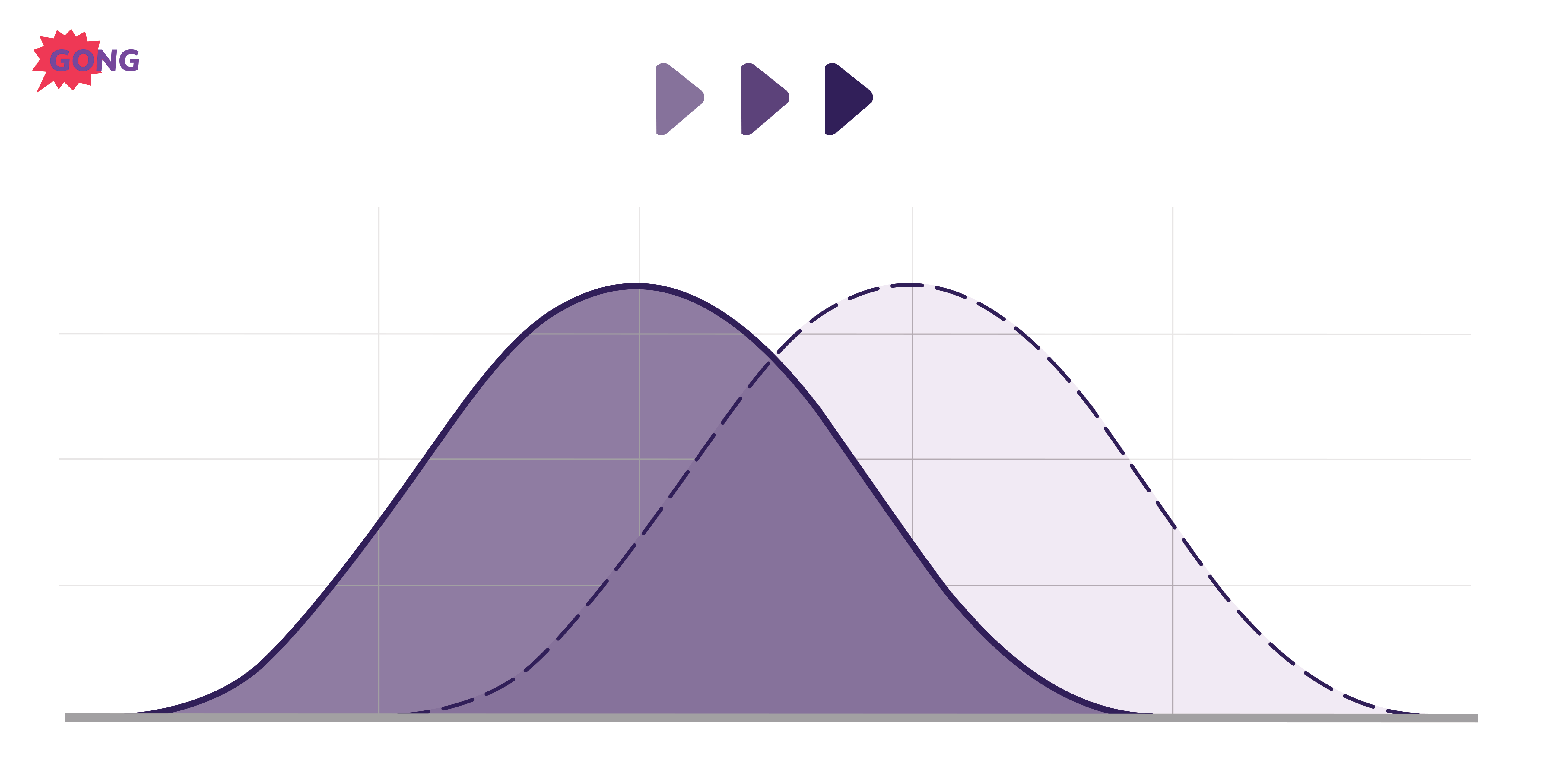
This “gap” creates the bell curve that we’re all familiar with:
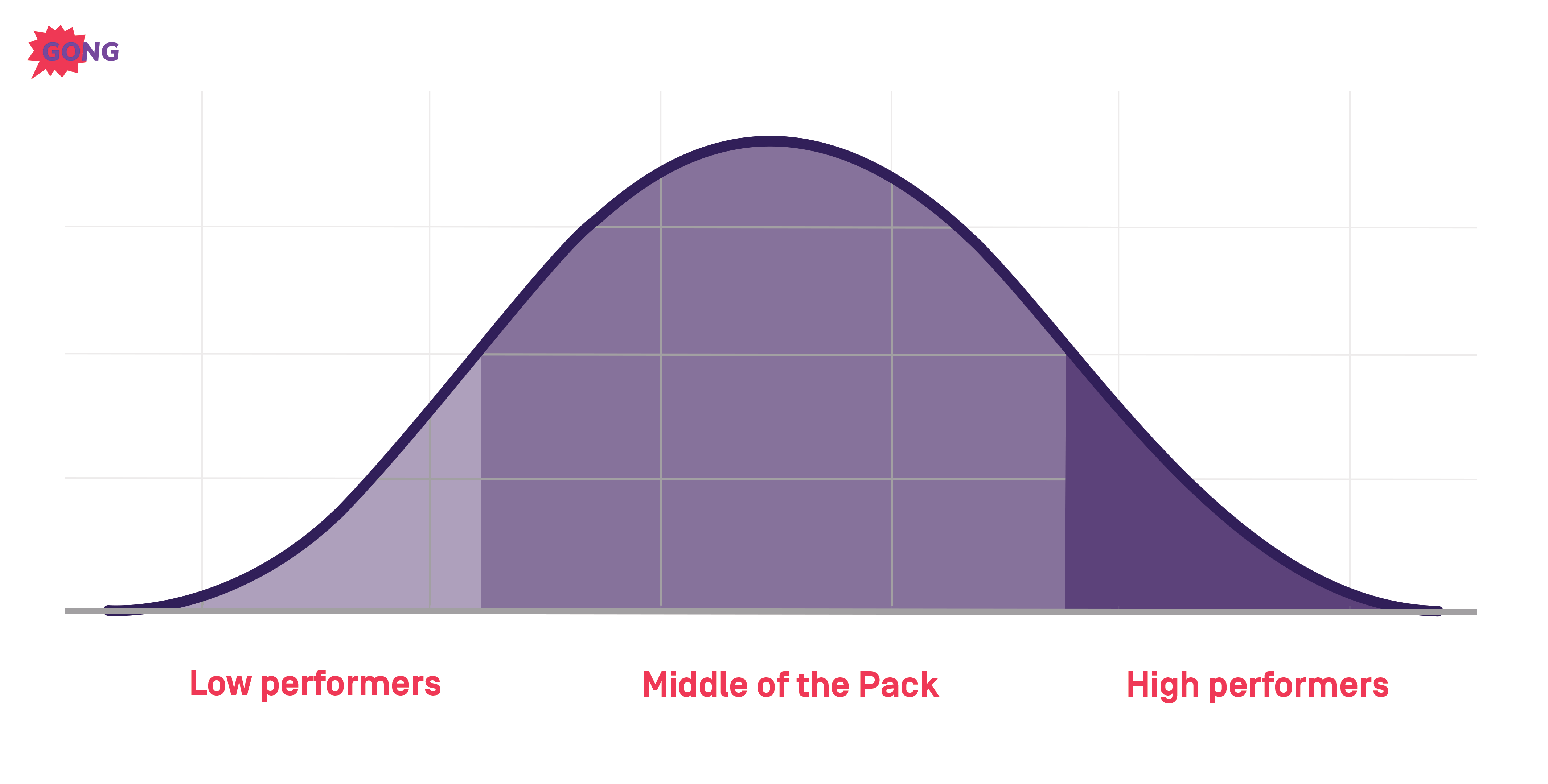
Despite the fact that we are highly familiar with this bell curve, most of us are asleep to the havoc it’s wreaking on our sales teams (and our careers).
Here are some examples…
High Cost of Revenue
Most sales leaders don’t have the luxury of winning deals atanycost.
The counterbalancing metric they are held accountable to isan acceptable cost of revenue.
Having a wide delta between your star reps and everyone elseballoonsyour cost of revenue.
Here’s how…
Despite what some of them may claim, your below-quota salespeople aren’t missing their numbers for lack of leads, or unfair territories.
They are missing their numbers because of sub-par win rates.
It’s aneffectivenessproblem in most cases, not a quantity problem.
If the majority of your sales force has aslightlyless-than-needed win rate, cost of revenuecompounds, just like compound interest.
Qualified opportunities arepouredinto a sales force that isn’t equipped to have sales conversations that materialize them into revenue.
Those qualified opportunities are expensive to generate.
And when your reps are operating at a sub-standard win-rate, they have to wade through more lost deals to finally get a win.
Those “wins” typically come withlonger sales cyclesandsmaller deal sizes(two strong symptoms of ineffective sales conversations).
Both of which further dial-up our cost of revenue metric.
High Rep Turnover
The most common reason reps voluntarily turnover is they aren’t quite making full quota, which means fewer dollars in their pocket.
Some of these reps may be a poor fit for the role.
But I’m not talking about them.
What I worry about is the good (but notyetgreat) repsconsistentlyscratching the surfaceof quota, but fallingjust short.
They are havingokaysales conversations, but notrainmaking sales conversations.
They eventually leave out of frustration, not lack of fit.
These reps who are close to quota, but not quite there, need nothing more than some strong coaching to get the rest of the way.
But instead, we’re left with a $97k average turnover cost.
And odds are,we’ll replace them with someone who will be in theexact situation9-12 months down the road.
“Whale Accounts” Washed Up On Shore
I couldn’t resist the metaphor.
There are likely many “whale accounts” your team could have wonif the sales conversations between your rep and the buyer were more effective.
Sales conversations dictate the trajectory of deals.
Sure, there are many other variables at play: the buyer’s environment, priorities, etc.
But what knocks a warm buyer to therightside of the fence is a sales conversation handled in a skillful manner.
How many on-the-fence whale accounts have been knocked to the wrong side?
These are just three examples that make the divide between your A-Players and B-Players such a havoc-wreaking problem.
On the surface, the decline of reps making quota looks like nothing more than a mildly troubling industry trend.
Underneath the surface, however, is a much more serious storm brewing.
Closing the Delta Between Your A-Players and B-Players
All of this considered, closing the delta between your top reps and average reps shouldviolentlymake its way to Priority #1.
It should become the dominant topic of discussion in sales management meetings.
As bleak as this post has seemed thus far (I’ve always had a flair for the dramatic…),there’s anincredibly positiveflip side to all of this.
Here’s it is…
Moving your middle-of-the-pack upjust a notchin terms of effectiveness is thesingle highest-leverage taskyou can take on.
Why?
Because by definition, middle-of-the-pack reps have the magic combination of two key ingredients:
- Raw potential
- Room for improvement
Your bottom performers lack #1.
They are likely in a role that doesn’t suit them.
They have potential, but it lies outside of the sales profession.
Your top performers lack #2.
They are already operating in the highest performance rungs.
They are like professional golfers: the best they can expect is to improve their 18-hole game by 1-2 strokes at best.
Your middle-of-the-pack is where the leverage is.
Focusing your coaching efforts on the middle 60% of your sales force is like putting a lever under a heavy boulder, and moving it with ease.
Focus on Sales Conversations
To close the delta between your stars and your middle-of-the-pack, you first must know whatseparates themso you can target coaching & training accordingly.
The first place to look is how they conduct their sales conversations differently from each other .
Sure, there are many variables to what makes superstars great.
But sales conversations are the most decisive difference between a superstar rep and an average one.
Here’s some data to illustrate that…
We analyzed 1M sales call recordings with machine learning and NLP and found that star salespeople discuss pricing at entirely different points during their demo calls than their peers do:
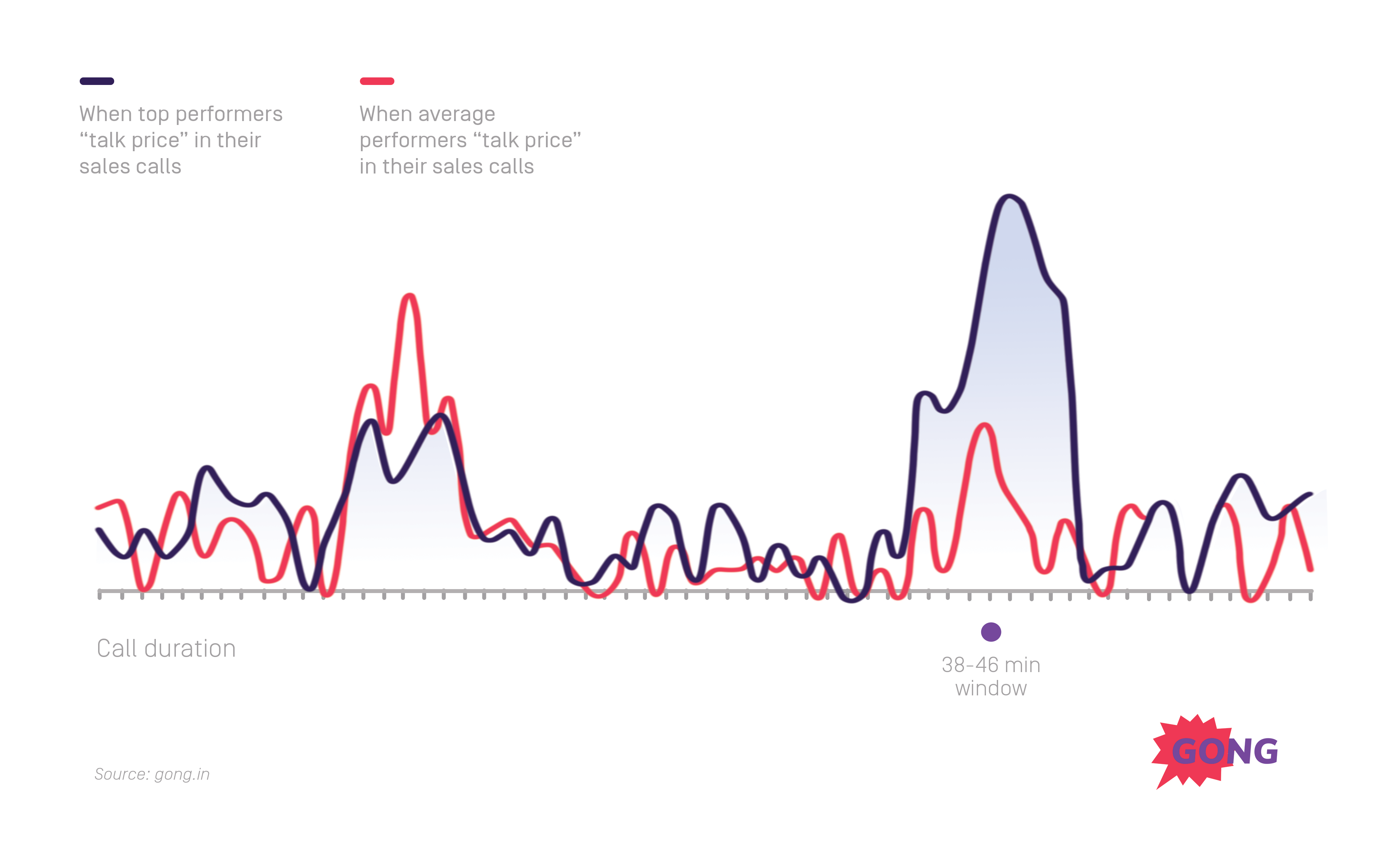
That is adecisivedifference, not a small incremental one.
Star reps also havedecisively differenttalk-to-listen ratios during their discovery calls:
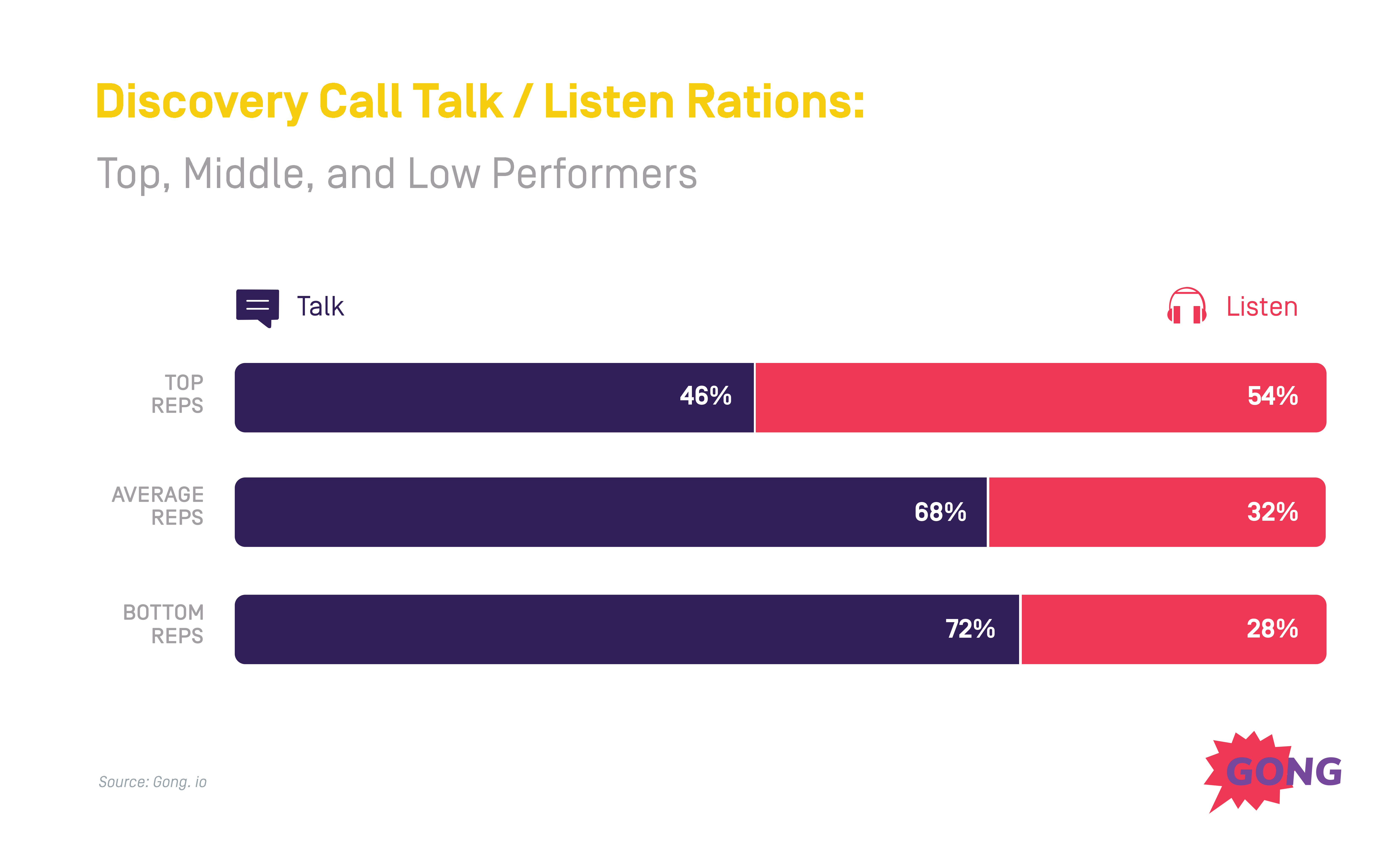
You get the idea.
I’ll refrain from posting every supporting data point we have since we’ve repeatedly posted them elsewhere.
(To see more data points like this, go here).
Here’s the point of sharing this data:
It indicates that the most decisive difference between above-quota reps, and below-quota reps, comes down to their sales conversations.
By contrast, there have been a few studies that havecome up shortin finding differences between A-Players and B-Players when analyzingnon-conversationbehaviors (such as activity volume, hours worked, etc.).
Sales Conversations: A Strategic Imperative
The declining tenure of the VP Sales and declining quota attainment trends are two hairy problems thatcan be managed and overcome by taking two continuous actions…
#1:Focusmostof your coaching & training on your middle-of-the-pack reps. That’s where you have leverage as a sales leader.
#2:Focus the above coaching & training specific tosales conversations:
- Replicatethe successful conversations of your star reps
- Coachyour middle-of-the-pack reps’ conversations to be more effective
- Rampnew hires faster by focusing most of their onboarding on mastering sales conversations
These are the levers we can pull to reverse the trends we talked about at the beginning.
When you break down a big problem into small, manageable tasks, you can start to move mountains.
These two tasks are your starting point.
P.S.If you want to get a head start on this, you have to know the specific behaviors successful reps do during conversations.
These behaviors serve as the “North Star” everyone else should strive to replicate.
We went ahead and did some of that work for you.
We analyzed 1M B2B sales call recordings with AI to see what separates star reps’ sales conversations from the rest.
Check it out in our new eBook: 9 Elements of Highly Effective Sales Conversations.

And don’t forget to send a copy to your team.
Content Author
Chris Orlob is the Co-Founder and CEO of Pclub.io, a leading sales training platform designed to help sales professionals accelerate their revenue growth. He is best known for his pivotal role at Gong, where he helped scale the company from $200,000 to $200 million in ARR, contributing to a $7.2 billion valuation. During his tenure at Gong, Chris led the creation of Gong Labs and excelled in various go-to-market roles. Today, through Pclub.io, he leverages his deep expertise in sales and revenue operations to coach over 11,000 SaaS sellers.
Win more with Gong
Loading form...
Discover more from Gong
Check out the latest product information, executive insights, and selling tips and tricks, all on the Gong blog.