Aim before you automate: How 4 revenue leaders drive measurable ROI

Simon Frey
Chief Customer Officer
Published on: October 6, 2026

If buying more tech fixed pipeline, every B2B company would be crushing its number right now. Most aren't.
I spend most of my time with Gong customers after the contract is signed, and the pattern is consistent: the teams getting real outcomes from AI didn't start with AI. They started with a problem worth solving, and then aimed the technology at it.
That was the through line at our Celebrate '26 Executive Showcase in Las Vegas, where I sat down with Experian's Lisa Dickson, Thomson Reuters' Marissa Council, Adyen's Evelina Petrova, and Snowflake's Keegan Riley. Four companies, four different problems. Same discipline: aim before you automate.
Experian consolidated to unlock productivity

Lisa Dickson, VP Sales Strategy and Enablement at Experian, has led her organization through two separate Gong rollouts. At Experian, it happened as her division coalesced after four acquisitions. The teams’ tools were fragmented, data was disconnected, and their customer context was consistently lost in handoffs. She had to convince stakeholders that consolidating onto a single AI-driven platform was worth the disruption. Her first step was to identify what she wanted to improve.
“You don't want to implement AI for AI’s sake. You have to start with where you're headed, and for us, it was all about driving productivity so we could drive revenue.” —Lisa Dickson, VP Sales Strategy and Enablement
Lisa honed in on the AI capabilities her team needed, including coaching, continuity, and uncovering signals. That kept her focused on outcomes as she brought everyone together.
When it came time to bring other teams into her vision, Lisa didn't mandate adoption; she proved impact with data. She says her team “opened the door and shared our information,” which allowed other teams to join them. “It’s been a better outcome overall for our customers, which is really what the north star was."
They saw a 25 percent lift in win rates as a result of better-qualified pipeline, effective handoffs, and earlier interventions on renewal risks. Lisa noted that "AI can't create your strategy, it can only scale your strategy." Good outcomes still depend on good decision-making and a solid data foundation.
Thomson Reuters gave its sellers a repeatable flow
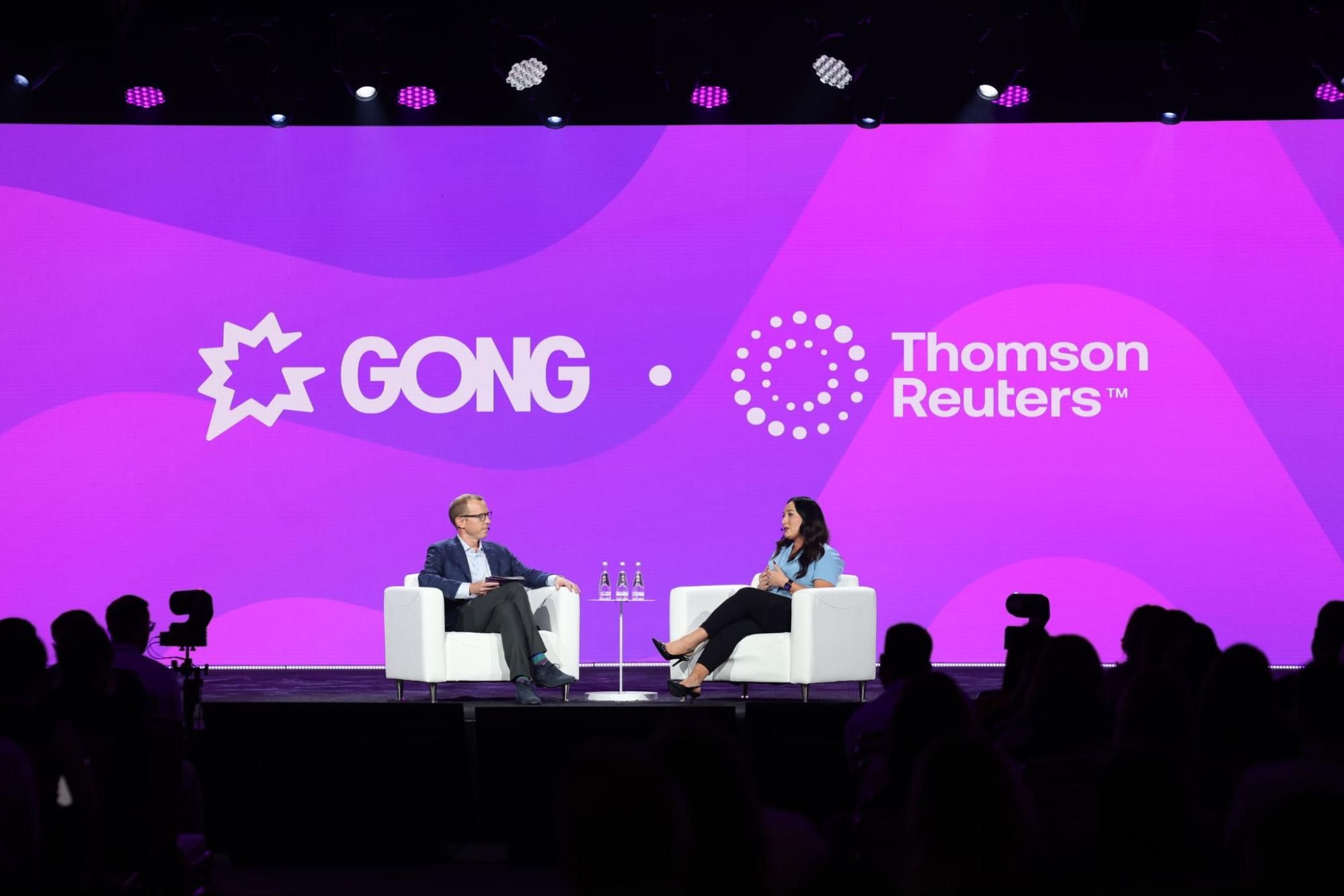
Marissa Council, Senior Director, Sales Technology Product Management at Thomson Reuters, had plenty of technology at her reps’ disposal, but they didn’t have a clear recipe for success. With an overwhelming stack of disjointed tools, reps were constantly swiveling between platforms, unsure of where to go for each part of the sales cycle. Her team set out to eliminate that by defining the role of each platform.
Salesforce remains their system of record, while Gong is the centralized system of engagement where reps manage deals, execute coaching, and run their day-to-day workflow.
“We partnered to … identify the points in our sales cycles where sellers were finding the most friction, where they were swiveling the most. … We've had a really fun time centralizing within the Gong platform.” —Marissa Council, Senior Director, Sales Technology Product Management
The work took a year, and it paid off: High adopters of Gong and Gong Engage see ~12 percent higher win rates than low adopters. In less than three months, the team also had $38M in pipeline touched by a Gong flow or Gong Engage and a 42% win rate on that pipeline.
Given her experience with Revenue AI, Marissa’s framing is spot on: "Technology transformation doesn't happen when you install software. It happens when you improve the experience of work."
Adyen treated two acquisitions like a product launch
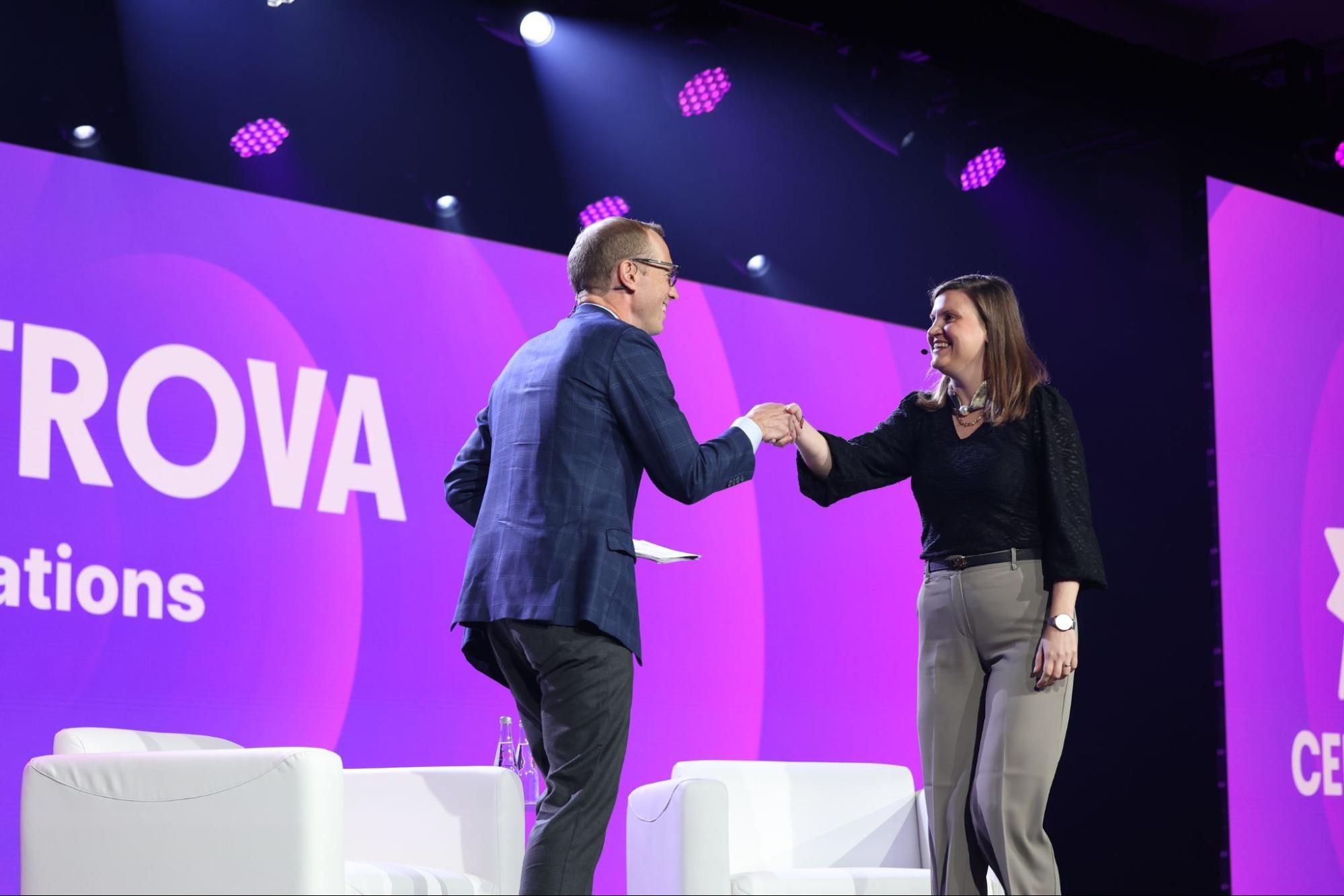
In July of 2026, Adyen acquired Orb and Talon. One on the same day. Evelina Petrova, who leads Revenue Operations at Adyen, said her team “decided to treat those two acquisitions as product launches, and product launches are usually a go-to-market problem.” That meant finding out quickly how messaging was landing rather than waiting for lagging indicators.
"The sooner you can do litmus tests and understand how the market is reacting, the more room you have to adjust your strategy, to understand what is sticking and what is not, and adjust the messaging." —Evelina Petrova, VP Revenue Operations
Her team split internal and external call data from Gong by merchant base versus prospect base and by geography. They were able to give leadership a full sentiment and positioning analysis just 60 days after the acquisitions.
That analysis uncovered that terminology and messaging varied across teams, regional engagement was uneven, and some verticals were weaker than others. It clarified for Evelina and her team exactly where to concentrate enablement.
As Evelina put it, “These are the gaps that everyone discovers when you launch a new product or you go to a new market. The difference here … is that we could figure it out on day 60 and pivot in a new way so we didn't lose a year.”
Her takeaway applies to leaders in any industry: If you’ve launched something new and don't know how the market will react, don't wait to find out. Analyze the conversations you're already having.
Snowflake turned rep enablement into a live experiment
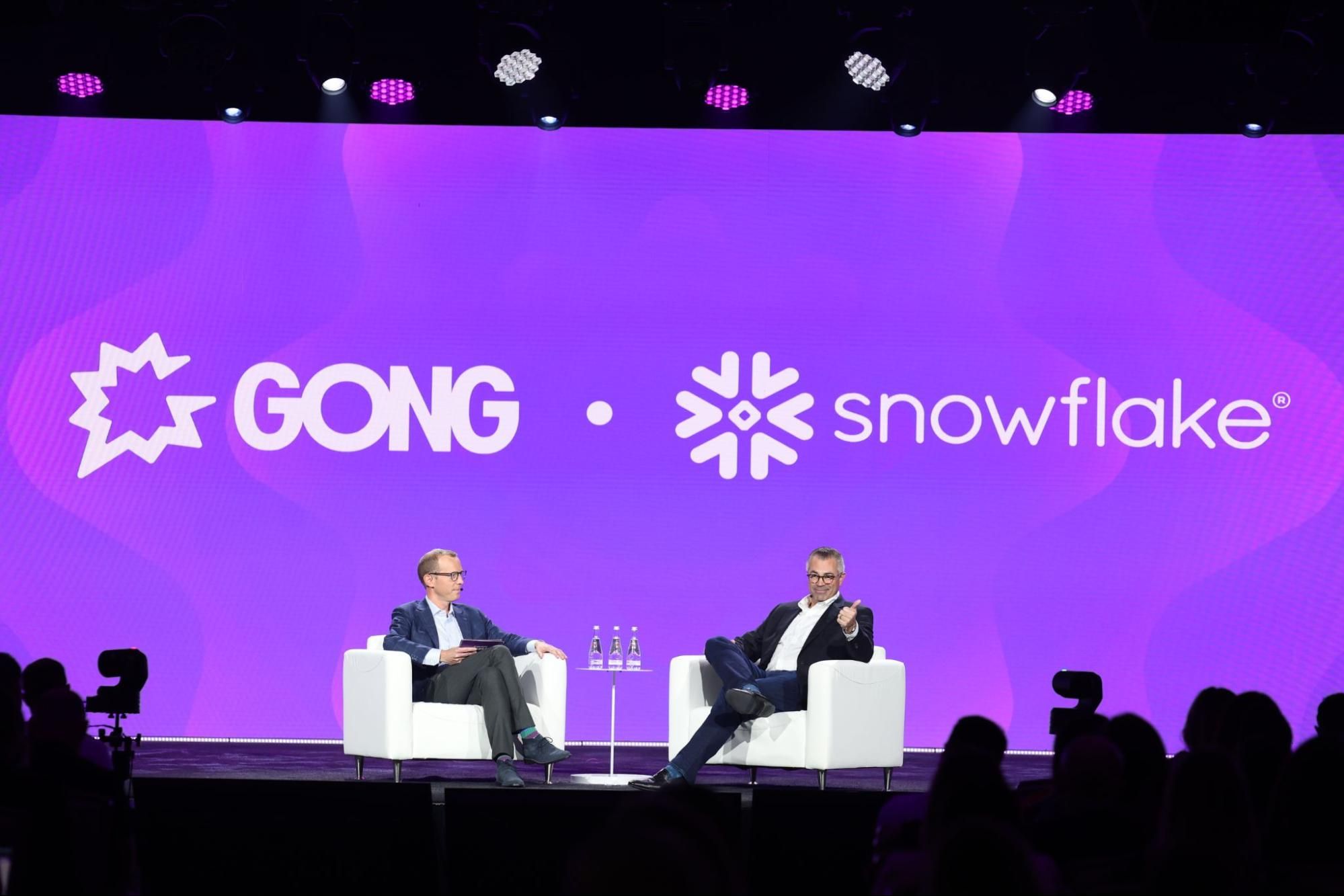
Snowflake positions itself as the control plane for the agentic enterprise. In our talk, Keegan Riley, SVP of Sales, Americas Acquisition, noted that existing accounts kept growing on its consumption model, but that growth would eventually stall without new logos. Snowflake restructured its sales org, and Keegan's team now runs a dedicated new-logo acquisition motion.
The specialized focus paid off. Snowflake just raised full-year guidance to over $6 billion, accelerating to 37% year-over-year growth, up from 29% last year.
Today, instead of pitching behind-the-scenes data plumbing to IT and CIOs, reps now lead live demos of Snowflake’s AI tools on nearly every call. They’re showcasing what's possible directly to business executives like CROs, CMOs, and CFOs. However, that meant retraining an entire sales org in real time to sell to brand-new personas with no established playbook.
If there's no playbook, you write one by listening, using AI. Keegan did that using a tight feedback loop, testing messaging deal by deal, and tracking which pitches landed. "Training and enablement is not a publishing effort,” he says. “It's a realtime experiment that you're running, and the only asset that truly compounds is the record of the sales calls and what has landed."
"We are flying the plane while we build it in this AI world. Everyone is in the same boat, everyone is a little disoriented, and you better make sure you have instrumentation on that team while you're flying it." —Keegan Riley, SVP of Sales
Intent separates AI leaders from AI buyers
Not one of these leaders started by saying, "Let's go buy some AI." Instead, they began with a concrete business decision or operational bottleneck they wanted to address. Only then did they chart a path forward, listening to their customers, their reps, and their data using AI. Rather than mandating AI adoption from the top down, they brought others along by solving real workflow friction and proving the value in the numbers.
Given their success, my question for other revenue leaders is this:
What's the one problem your team has to solve next year?
Name it. Then aim your AI at it.
Chief Customer Officer
Win more with Gong
Loading form...
Discover more from Gong
Check out the latest product information, executive insights, and selling tips and tricks, all on the Gong blog.