Revenue AI
Why context graphs are the new currency of AI… but still not enough

Eilon Reshef
Chief Product Officer & Co-Founder at Gong
Published on: March 16, 2026

AI Summary
Everyone is talking about “context graphs” and AI. It’s about time.
At its core, the premise in most conversations is simple and correct: AI is only as smart as the information you give it.
But companies ignore a major catch: The majority of data is unstructured; for revenue organizations, it lives inside your team’s calls, meetings, and emails, not in the tidy structure of a CRM.
When we built the Gong Revenue AI Operating System (OS), we didn’t just want a better database; we wanted to capture the messy human context that CRMs miss. But as we’ve moved further into this journey, we’ve realized that access to this data is not sufficient for revenue teams. The real value happens when they can operationalize that context, using it to inform decisions and guide their team’s actions.
Now that the conversation at many organizations is shifting toward context graphs, we need to be clear about what they are and what they aren’t. Otherwise, teams will be stuck with data libraries and maps instead of actionable insights.
What people get right (and wrong) about context graphs
Every tech giant has a graph now. Microsoft has a graph for your files. LinkedIn has an economic graph for jobs and skills. Salesforce uses graphs to harmonize customer data.
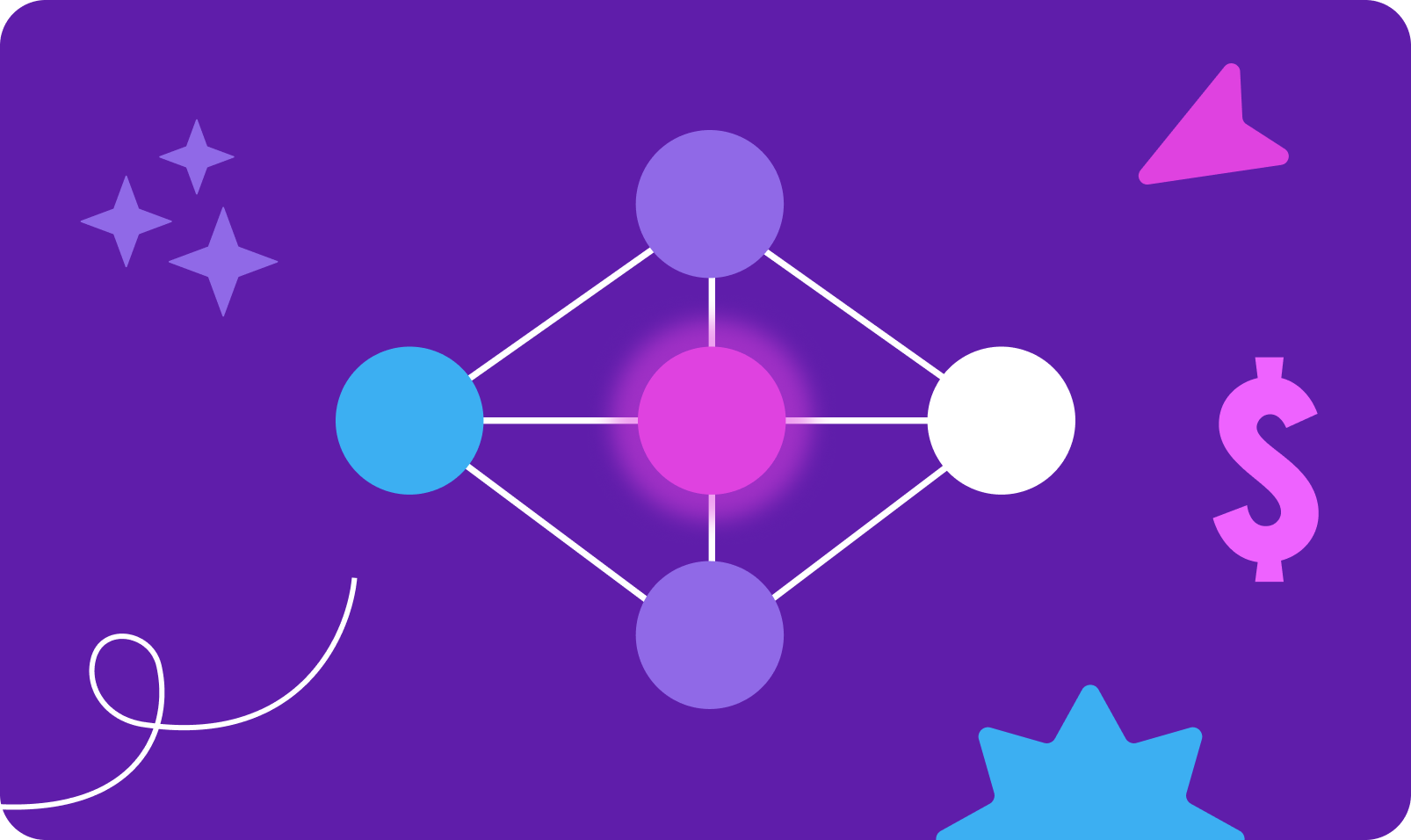
By definition, context graphs are models of entities and relationships that AI uses to reason more effectively. For a leader, a graph is like a great map: very handy and filled with vital information, but it won’t make decisions for you or drive your car.
Real ROI only happens when the graph is part of a three-layer operating system:
- A graph: A rich, high-fidelity foundation of unstructured data, straight from customer interactions
- An AI layer: A reasoning engine aligned specifically to that graph (and hopefully) trained on a particular domain (in the case of Gong: sales and revenue)
- Applications: The layer that turns those insights into prescribed actions or automated workflows
If you’re missing any of these, you don’t have a data-based map, an AI strategy, or a system of action; you have a data library.
What you want is a system that moves away from acting like a rearview mirror and toward one that provides forward momentum. Context graphs should turn your data into better judgment and faster wins.
Why context alone isn’t enough
Modern revenue teams don’t struggle because they lack data. They struggle because the data they have is fragmented, noisy, and constantly changing. Signals conflict with one another. Truth evolves over time. Most importantly, their data is rarely the “raw truth,” but rather, a filtered version of reality as captured by reps in the CRM after the fact.
Consider the simple, familiar example of when a deal moves from “commit” to “slip.” A CRM system faithfully records that a change occurred, but it doesn’t explain why.
- Was it pricing?
- A competitor?
- A key stakeholder leaving the company?
- A budget freeze that surfaced late in the quarter?
The answer isn’t in a field or dropdown. It lives in the unstructured data of conversations, emails, and meetings. Generic context graphs fall short because they offer abstract memory. What revenue teams need is situational intelligence, i.e., the ability to see how deals are won or lost under pressure.
From context graph to revenue graph
The Gong Revenue Graph is not a theoretical construct. It’s a high-fidelity record of how your business functions. It connects the most relevant aspects of your deals (accounts, opportunities, contacts, reps and managers, products, competitors, interactions, events) to answer the questions that matter most to a revenue leader:
What actually happened? It captures raw, unstructured evidence from calls, emails, meetings, demos, and follow-ups to form a complete record of what happens in every deal.
What was said — and what was meant? It synthesizes conversations into signals about objections, pain points, competitive dynamics, buying intent, deal momentum, and more. For a generic graph, this is the end, but for the Gong Revenue Graph, it’s just the start.
How did reality change over time? Revenue is defined by time. The Gong Revenue Graph tracks when the narrative shifted from optimism to hesitation, turning hindsight into foresight.
Who matters in this deal? Revenue is also fundamentally social, and influence emerges through interaction patterns, not just titles. The Gong Revenue Graph surfaces what’s actually driving (and blocking) momentum.
Which actions led to wins? We move beyond “what happened” to “what worked.” By connecting interactions to outcomes, you can turn every deal into a source of learning for the entire team.
What were the results? Wins, losses, expansion, churn, and forecast accuracy aren’t just endpoints, they’re the validation of the signals and decisions that preceded them.
The Gong Revenue Graph takes this organizational context and uses it across the Gong Revenue AI OS to determine next-best actions, deal guidance, coaching moments, and workflow automations.
The Gong Revenue AI OS: Context, operationalized
Traditional business intelligence is retrospective by design. It tells you what happened after it’s too late to change it. Modern revenue teams need something fundamentally different. They need to understand what’s happening now, what is likely to happen next, and which actions will most meaningfully influence the outcome.
Capturing revenue context, including conversations, signals, and patterns, is the necessary first step. At Gong, we’ve seen deeper value emerge when that context is operationalized and woven directly into decision-making, embedded into workflows, and continuously validated against real business outcomes.
Context graphs are an important step forward for AI. But for revenue teams, context without action-oriented guidance is simply metadata. The future belongs to systems that do more than capture information. Revenue teams need systems that operationalize context at scale, reason over it, learn from it, and translate it into better decisions and actions.
That is why the Gong Revenue Graph is more than infrastructure. It’s the foundation of our AI OS, and the reason Gong exists. It reflects what we’ve learned over years of observing how revenue happens, and it’s how your revenue team can win in the era of AI.
Chief Product Officer & Co-Founder at Gong
Eilon Reshef is the Co-Founder and Chief Product Officer at Gong, the leading platform in the revenue intelligence space. Since co-founding Gong in 2015, Eilon has spearheaded its product and engineering efforts, transforming how sales teams harness data to drive success. Gong uses AI to analyze sales interactions, offering actionable insights that help businesses grow revenue. Prior to Gong, Eilon co-founded Webcollage, a SaaS platform for e-commerce infrastructure. With deep expertise in product strategy and AI, Eilon is a key figure in advancing sales technology and operations.
Win more with Gong
Loading form...
Discover more from Gong
Check out the latest product information, executive insights, and selling tips and tricks, all on the Gong blog.